
Squirrels in the Attic? How Squirrels, Raccoons, Bats and Mice Get Into Essex County, New Jersey Roofs, and How the Openings Get Closed
Scratching Overhead in an Essex County Home? Start Here
- Where they got in: almost always at the roof edge: soffits, fascia, gable and roof vents, ridge vent ends or the chimney.
- Do not seal it yet: from February to May and August to October, squirrel babies are very likely inside (Humane World for Animals).
- Who removes them: a pest control company or your local animal control officer (NJ Fish and Wildlife). Bats have their own legal dates.
- Then the repair: once the attic is empty, the opening is closed with metal. That part is roof work.
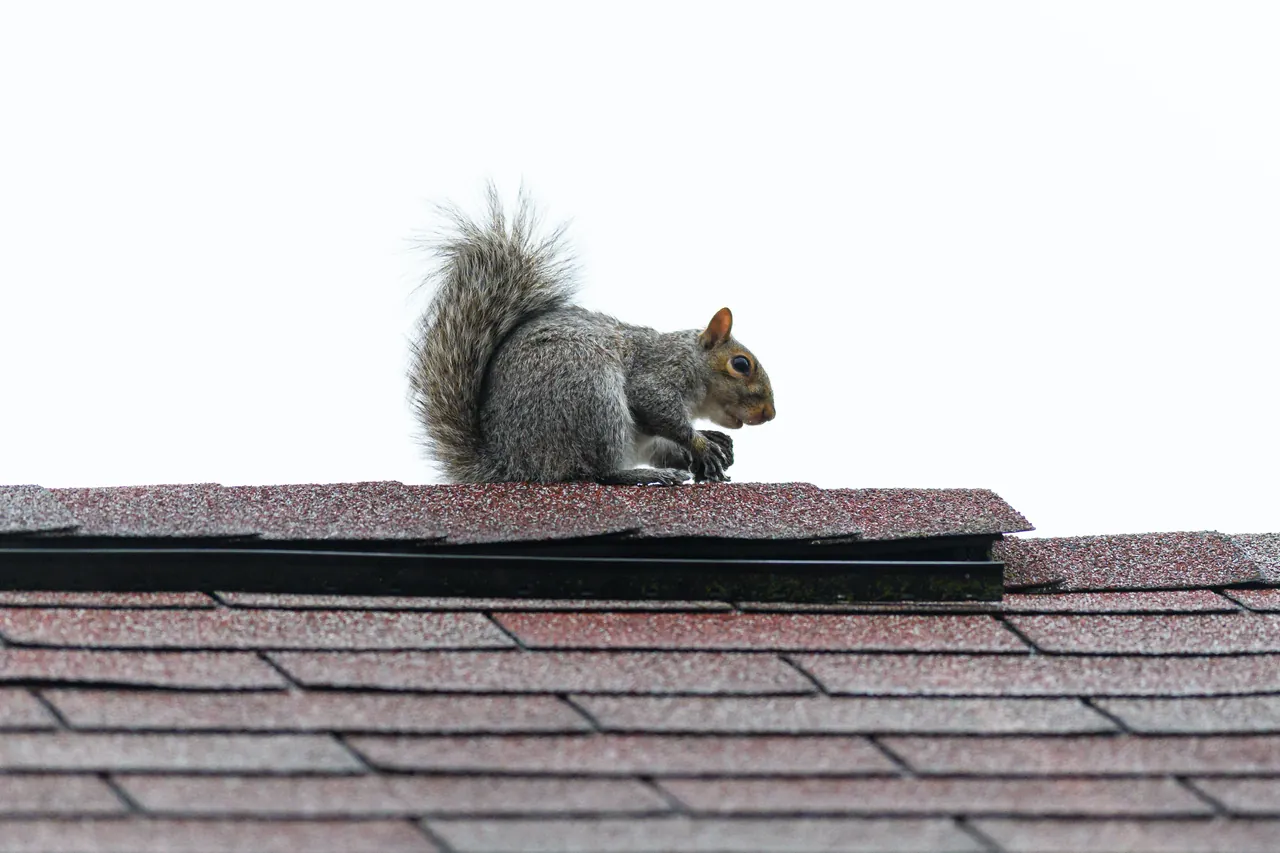
Every animal in an attic came in through an opening, and on most houses that opening is on the roof: a soft spot in the soffit, a vent with a thin screen, a loose cap on the ridge vent, or a chimney with no cover. Getting the animal out does not close it.
The pages that rank for this search today are a 2018 Reddit thread, a national pest company's removal page and a 200-word answer from another. None says which openings on a roof to check, how small a gap each animal needs, what New Jersey allows, or how the hole should be repaired. This guide covers those, with every fact linked to its source. R&E Roofing does not trap or remove animals; we repair the roof openings they used. That work is described on our roof repair page.
Where Animals Get In on a Roof
The CDC tells homeowners to check the roof among the rafters, gables, eaves and soffits, and around attic vents. New Jersey Fish and Wildlife lists attic vents, the peaks where siding meets the trim or roof line, dormers, gaps behind a chimney and the eaves. On a roof, that comes down to these spots:
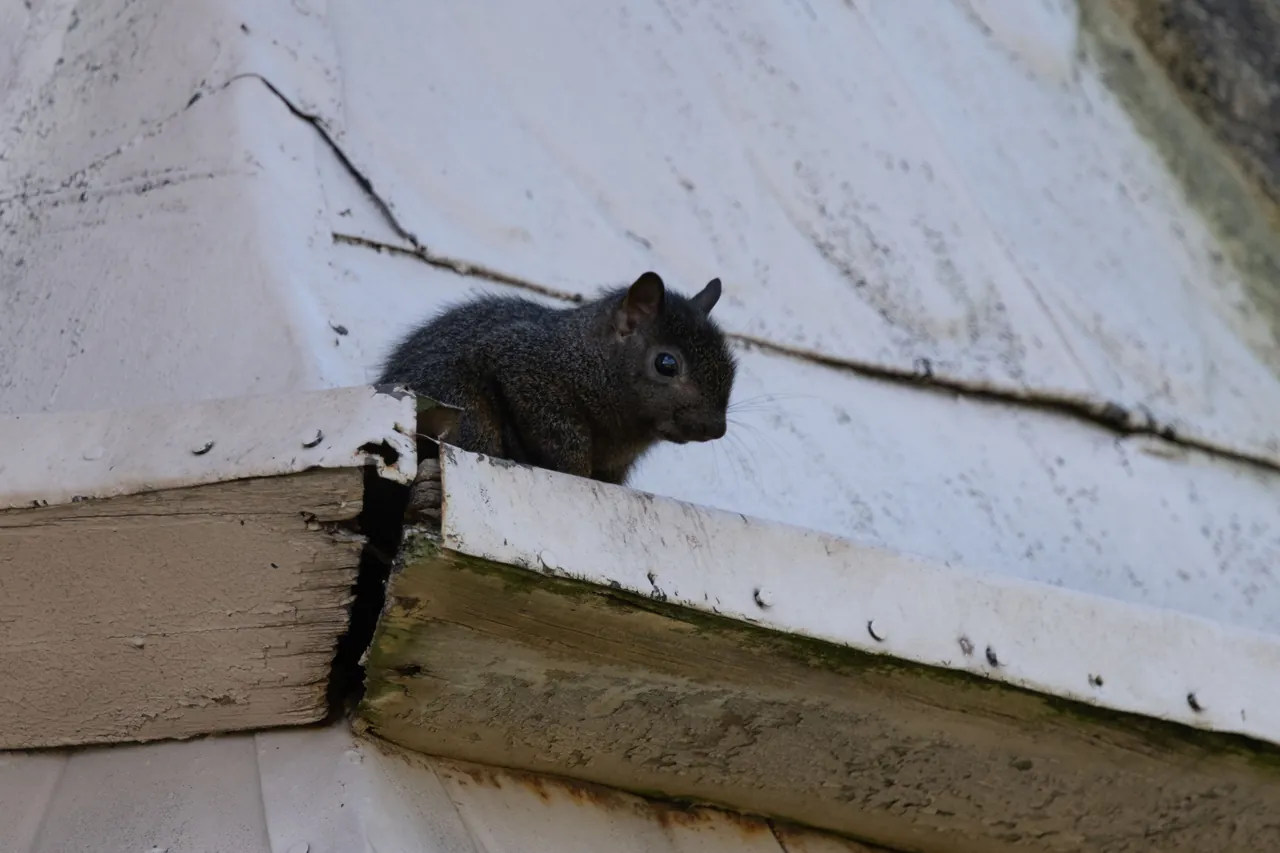
- Soffits and soffit vents. Cornell says soffit vent openings are used by animals from house sparrows to raccoons, and Humane World notes that vinyl soffit is pliant enough for raccoons to work through. Our soffit and fascia repair page covers that fix.
- Rotted or loose trim and fascia. Humane World says squirrels often nest near loose or rotten trim boards, and tells homeowners to look for trim that has pulled away from the wall.
- Gable and roof vents. These are often covered with light bug screen that will not stand up to squirrels and raccoons (Humane World). Cornell advises replacing plastic gable louvers with metal ones.
- Ridge vent end caps. Cornell says these caps frequently work loose, letting sparrows, mice and bats into the attic. Our ridge vent page explains how a ridge vent is put together.
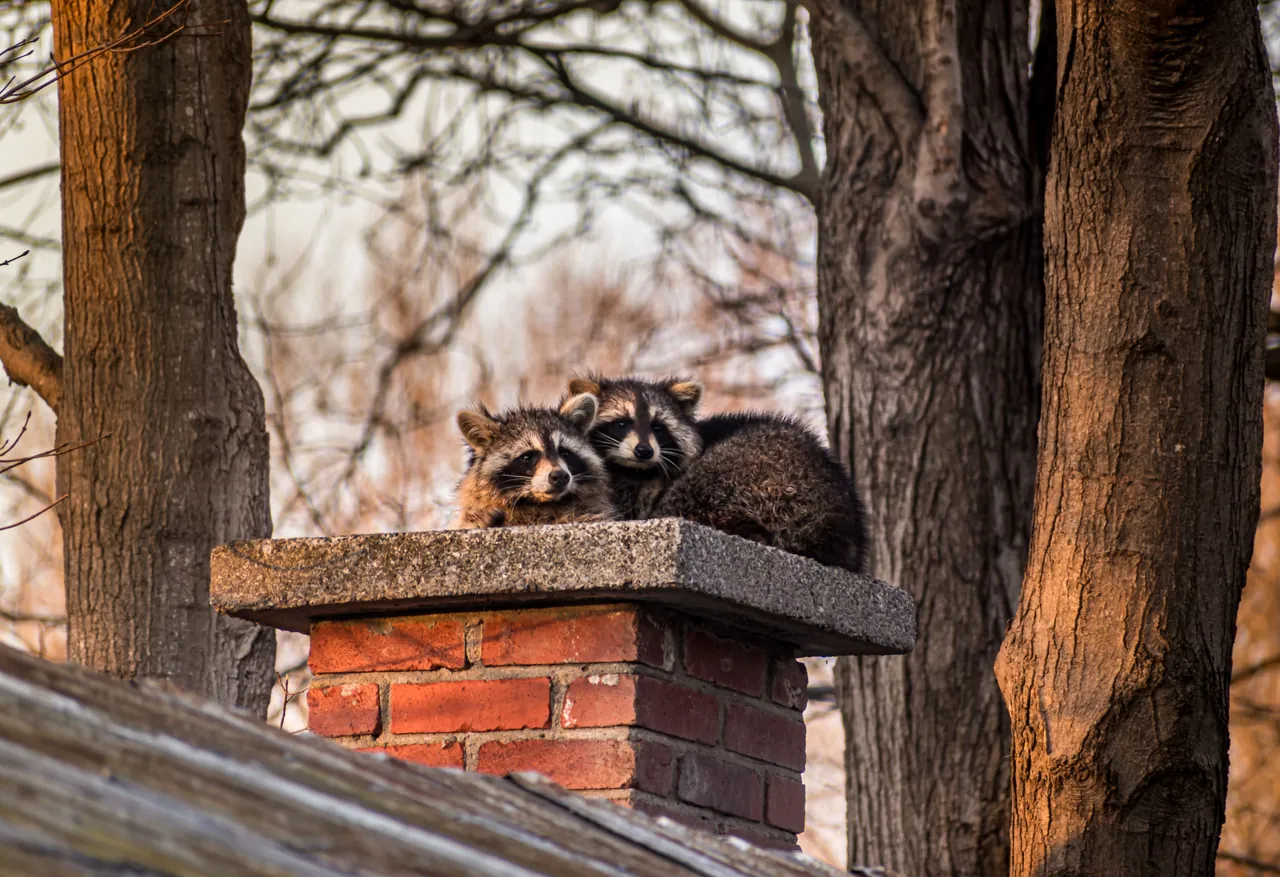
- The chimney. An uncapped flue is, in Humane World's words, the perfect nursery for a mother raccoon, and NJ Fish and Wildlife names gaps behind a chimney as a bat entry. A chimney cap closes the flue.
- Dormers and joints. Raccoons often get in where different building materials join, such as dormer junctions (Humane World).
- Plumbing vent pipes. Cornell recommends commercial shields on vent pipes to keep rodents and birds out. A cracked vent pipe boot also leaves a gap at the roof.
Why Essex County roofs are prone to it. In Essex County, 29.1% of homes were built in 1939 or earlier (U.S. Census Bureau, American Community Survey 2020-2024). Aging wood trim, soffits and vents are the weak points Humane World and Cornell describe. Humane World's inside check works on any house: turn off the attic lights and look for daylight showing through.
Sources, read November 16, 2026: CDC, How to Seal Up to Prevent Rodents (updated April 8, 2024); NJ Fish and Wildlife, Bats in Buildings (updated April 1, 2026); Cornell Integrated Pest Management, Pest Exclusion; Humane World for Animals, What to do about squirrels; Humane World for Animals, What to do about raccoons; Humane World for Animals, How to keep wild animals out of your home; U.S. Census Bureau, ACS 2020-2024 5-year, table DP04, Essex County, NJ.
How Small a Gap Each Animal Needs
A gap that looks too small to matter often is not. These are the figures public agencies publish:
Smallest openings animals can use, by source
| Animal | Opening it can use |
|---|---|
| House mouse | 1/4 inch, the width of a pencil (CDC) |
| Roof rat | Openings must be under 1/2 inch to keep adults out (CDC) |
| Norway rat | Openings must be under 3/4 inch to keep adults out (CDC) |
| Bat | 1/4 inch (CDC); 3/8 inch (NJ Department of Health); a half-inch gap (NJ Fish and Wildlife) |
| Raccoon | 3.5 inches (Humane World for Animals) |
| Gray or flying squirrel | No published figure found; any opening a raccoon can use, a squirrel can use (ICWDM) |
- The bat figures disagree. The CDC says 1/4 inch, the New Jersey Department of Health 3/8 inch, and NJ Fish and Wildlife a half-inch gap. Plan for the smallest.
- Bats do not make holes. NJ Fish and Wildlife says bats are not rodents and do not chew or claw new holes; they use gaps that already exist.
- Squirrels make their own. Penn State Extension says squirrels chew siding and under eaves to make openings for their nests.
- The code already sets the size. New Jersey's residential code (2024 IRC, Section R806.1) says attic vent openings must be no larger than 1/4 inch in their least dimension and protected against birds, rodents, snakes and similar creatures. A vent with a torn screen no longer meets that.
Sources, read November 16, 2026: CDC, Seal Up; CDC, Integrated Pest Management: Conducting Urban Rodent Surveys; CDC, Bats and rabies (updated July 1, 2025); NJ Department of Health, What to know about bats (revised April 2014); NJ Fish and Wildlife, Nuisance Wildlife Control Guidelines for Bats (April 1, 2026); Humane World, raccoons; Internet Center for Wildlife Damage Management (ICWDM), Holes; Penn State Extension, Tree Squirrels; 2024 IRC, New Jersey edition, Section R806 (UpCodes).
Out First, Then Closed: The Order That Works
Sealing a hole with an animal behind it is the most common mistake. Penn State Extension warns that squirrels shut inside may cause damage chewing their way out. The sources agree on this order:
- Find every opening. Humane World says to inspect the inside of the attic first, then the outside eaves, vents and roof.
- Get the animal out. NJ Fish and Wildlife sends homeowners with squirrels or raccoons to a pest control company or the local animal control officer. Humane World says one-way doors for raccoons are best left to professionals, who can make sure mothers are not cut off from their young.
- Prove it is empty. WildlifeHelp's New Jersey guidance: plug the hole with wadded newspaper and check it in 24 to 48 hours. Humane World waits three days of mild weather; Cornell says to monitor for at least two days.
- Close it with metal. WildlifeHelp names heavy-gauge 1/2-inch wire mesh or aluminum flashing; the next section covers which holds up.
- Listen afterwards. Humane World says frantic attempts to get back in usually mean young are still inside. In that case the patch comes off until the mother moves them.
Skip the repellents. WildlifeHelp says that for squirrels in buildings, repellents provide little or no effectiveness and are not generally recommended.
Sources, read November 16, 2026: Penn State Extension; Humane World, squirrels; Humane World, raccoons; Humane World, keep wild animals out; NJ Fish and Wildlife, Need Help With Wildlife (updated February 24, 2026); WildlifeHelp.org, squirrels in a house or building in New Jersey; Cornell, Pest Exclusion.
What New Jersey Allows
New Jersey's rules differ by animal, and bats are the strictest:
- Squirrels and raccoons. Under N.J.A.C. 7:25-5.21, owners and occupants of a home suffering damage from squirrels, raccoons and several other species, or their agents designated in writing, may control these animals by lawful procedures at any time, subject to State law and local ordinances.
- The state does not remove them. NJ Fish and Wildlife says it does not move wildlife, because removing animals generally results in other animals moving in.
- Release near home, not miles away. The state's relocation policy encourages capping the chimney and other changes that allow release on site, and encourages all releases within two miles of the capture site. Young found with adults must be relocated with them.
- Raccoons carry extra limits. The policy classifies raccoons as a rabies vector species: if they cannot be released where caught, release must be in the same township and no more than 10 miles away.
- Bats are protected. NJ Fish and Wildlife says physically removing or poisoning bats is not legal, and that it is illegal to harm, harass, capture or kill them.
- Bat dates. Exclusion is allowed only from April 1 to May 14 and August 1 to October 15. Excluders stay up for at least one week, including three nights above 50°F, before the openings are sealed.
The fix the state points to is exclusion. Its relocation policy says that without exclusion devices, or without removing what attracted the animal, the problem will continue even if the animal is removed. Exclusion, on most houses, means repairing the roof edge.
Sources, read November 16, 2026: N.J.A.C. 7:25-5.21 (Cornell Legal Information Institute copy); NJ Fish and Wildlife, Need Help With Wildlife; NJ Division of Fish and Wildlife, Policy on the Relocation of Wildlife; NJ Fish and Wildlife, Bats in Buildings; NJ Fish and Wildlife, Nuisance Wildlife Control Guidelines for Bats.
The Months That Change the Plan
When you hear the noise matters as much as what is making it, because babies change what can be done and when:
Breeding and legal windows for attic animals in New Jersey
| Animal | Months that matter |
|---|---|
| Squirrels | Babies very likely February to May and August to October (Humane World). Gray squirrels breed in mid-December or early January and again in June (Penn State Extension). |
| Raccoons | Young born March to April (NJ Fish and Wildlife); they leave the attic with the mother at around 10 weeks (Humane World). |
| Bats | Exclusion only April 1 to May 14 and August 1 to October 15. No evictions May 15 to July 31 (pups) or October 16 to March 31 (hibernation) (NJ Fish and Wildlife, April 2026). |
| Mice | Most likely to move in as temperatures cool in the fall (ICWDM). |
Winter brings its own trap. Cornell notes that many animals, raccoons among them, are inactive for long stretches in cold weather, so a hole can look unused until a warm spell, and snow and ice make outside work hard to do safely. NJ Fish and Wildlife says raccoons stay in their dens through very cold periods but do not hibernate.
Sources, read November 16, 2026: Humane World, squirrels; Penn State Extension; NJ Fish and Wildlife, raccoon fact sheet; Humane World, raccoons; NJ Fish and Wildlife, bat guidelines (April 1, 2026); ICWDM, House Mouse Biology; Cornell, Pest Exclusion.
What a Lasting Repair Is Made Of
A patch that an animal can chew through is a temporary patch. The sources agree on metal, but not on every kind of metal:
- Galvanized sheet metal. Cornell says it is durable and, attached with screws, resists removal by raccoons and other animals. No source we read disputes it.
- Heavy wire mesh. WildlifeHelp and Penn State Extension name heavy 1/2-inch wire mesh. For raccoons, Humane World recommends 16-gauge, 1-by-1-inch steel mesh and warns that 1/4-inch bug screen will not hold.
- Aluminum flashing, with a caution. Humane World calls solid aluminum flashing the material of choice for squirrels. Cornell says raccoons and rodents can usually chew or claw through it and calls it best for birds and bats.
- Vents built for it. Cornell recommends metal gable louvers in place of plastic, enclosed metal or heavy-duty roof vents, metal soffit louvers fastened securely, and new end caps on loose ridge vents.
- A real chimney cap. Humane World says to make sure every animal has left the chimney before a cap goes on, and Cornell warns that many homemade covers do not meet legal safety requirements.
- The trees. Penn State Extension advises trimming trees and limbs 6 to 8 feet away from the house.
Most of these repairs sit on the roof edge, so the work is usually part of a roof repair: replacing a rotted fascia board, refitting soffit, swapping a plastic vent for metal, or capping the chimney. The other jobs go to other trades:
Who handles each part of an animal problem in New Jersey
| Job | Who does it |
|---|---|
| Trapping, one-way doors, getting squirrels or raccoons out | A pest control company or your local animal control officer (NJ Fish and Wildlife) |
| Bats in the attic | A professional bat exclusion company, inside the state's safe dates (NJ Fish and Wildlife) |
| A bat in a room where someone slept | Your local health department (NJ Department of Health) |
| Chewed wiring | An electrician (Humane World) |
| Animals in the chimney flue | A chimney sweep to clean the flue (Humane World) |
| Soffit, fascia, vents, ridge vent caps, chimney cap, roof-edge holes | A roofer, once the attic is confirmed empty |
Sources, read November 16, 2026: Cornell, Pest Exclusion; WildlifeHelp.org; Penn State Extension; Humane World, keep wild animals out; Humane World, squirrels; Humane World, raccoons; NJ Fish and Wildlife, Need Help With Wildlife; NJ Fish and Wildlife, Bats in Buildings; NJ Department of Health, bats.
Health Risks Worth Knowing
- Rabies. The New Jersey Department of Health says rabies occurs most often in raccoons, bats, skunks, groundhogs and foxes, and that small rodents such as mice and squirrels are rarely infected.
- A bat where someone slept. The Department of Health says the local health department should be consulted and the bat tested. Never touch a bat with bare hands.
- Raccoon roundworm. The CDC says raccoon feces can be found in attics, the roundworm eggs are not visible to the naked eye, and anyone working in a confined space should wear an N95-rated respirator.
- Hantavirus. The CDC says the most common hantavirus in the United States is spread by the deer mouse, and advises sealing holes and gaps to keep rodents out.
- Chewed wiring. Penn State Extension says nesting squirrels chew the insulation around wires, and bare wires may cause a fire. Humane World advises having an electrician inspect exposed wiring once they are gone.
Sources, read November 16, 2026: NJ Department of Health, Rabies FAQ (2024); NJ Department of Health, What to know about bats; CDC, Preventing Baylisascaris (updated November 5, 2024); CDC, About Hantavirus (updated May 13, 2024); Penn State Extension; Humane World, squirrels.
Questions About Animals in the Attic
Should I worry about squirrels in my attic?
Yes, for the house more than for your health. Penn State Extension says nesting squirrels chew insulation and the insulation around wires, and bare wires can cause a fire. Humane World for Animals says transmission of disease from squirrels to people has rarely, if ever, been documented, and the New Jersey Department of Health says squirrels are rarely infected with rabies. The opening they used also lets in water and other animals.
What should I do if I hear squirrels in my attic?
Do not seal the hole yet. Find the opening, then have a pest control company or your local animal control officer get the squirrels out, which is what New Jersey Fish and Wildlife advises. From February to May and August to October, babies are very likely inside. Once a newspaper plug in the hole stays undisturbed, have the opening closed with metal.
What is the 5-7-9 rule for squirrels?
We could not find a government or university source that defines it. The published distance we found is Penn State Extension's advice to trim trees and limbs 6 to 8 feet away from buildings so squirrels cannot jump onto the roof. Humane World for Animals gives 6 feet.
How long will squirrels stay in the attic?
A nesting mother stays until her young can leave with her. Penn State Extension says young squirrels are weaned after two months, and Humane World advises waiting a few weeks until the babies are old enough to leave with their mother. Squirrels that are shut in may chew their way out, so the hole is closed only after the attic is empty.
Who do I call for an animal in the attic in New Jersey?
For squirrels, raccoons, skunks and woodchucks, New Jersey Fish and Wildlife says to contact a pest control company or your local animal control officer; the state does not move wildlife itself. For bats, the state points to professional bat exclusion companies. For the roof repair afterwards, call a roofer.
Can I seal the hole while the animal is still inside?
No. Humane World for Animals says to assume an animal is present and never seal a hole until you are completely sure all animals are gone. Penn State Extension warns that squirrels shut inside may cause damage chewing their way out, and Humane World says a mother separated from her young may tear back in.
Is it legal to remove bats from my attic in New Jersey?
Not by catching or poisoning them. New Jersey Fish and Wildlife says physically removing or poisoning bats is not legal. Bats are excluded with one-way devices, only from April 1 to May 14 and August 1 to October 15, and the excluders stay up for at least a week before the openings are sealed.
Does R&E Roofing remove animals from attics?
No. We do not trap or remove animals. Once a pest control company or animal control officer has the animal out, we repair the roof openings it used: soffits, fascia, vents, ridge vent caps, chimney caps and roof-edge holes on homes in Orange and across Essex County. Call (667) 204-1609 or use our quote form.
Sources
Every fact on this page comes from one of these, each read on November 16, 2026.
- N.J.A.C. 7:25-5.21, squirrel, raccoon and other species damage (Cornell Legal Information Institute)
- NJ Division of Fish and Wildlife, Policy on the Relocation of Wildlife
- NJ Fish and Wildlife, Need Help With Wildlife? (updated February 24, 2026)
- NJ Fish and Wildlife, Bats in Buildings (updated April 1, 2026)
- NJ Fish and Wildlife, Nuisance Wildlife Control Guidelines for Bats (April 1, 2026)
- NJ Fish and Wildlife, Raccoon fact sheet
- NJ Department of Health, What You Should Know About Bats (revised April 2014)
- NJ Department of Health, Rabies Frequently Asked Questions (2024)
- CDC, How to Seal Up to Prevent Rodents (updated April 8, 2024)
- CDC, Integrated Pest Management: Conducting Urban Rodent Surveys
- CDC, Bats and Rabies (updated July 1, 2025)
- CDC, Preventing Baylisascaris Infection (updated November 5, 2024)
- CDC, About Hantavirus (updated May 13, 2024)
- Humane World for Animals, What to do about squirrels
- Humane World for Animals, What to do about raccoons
- Humane World for Animals, How to keep wild animals out of your home
- WildlifeHelp.org, How to get squirrels out of my house or other building in New Jersey
- Cornell Integrated Pest Management, Pest Exclusion
- Penn State Extension, Tree Squirrels
- ICWDM, Tree Squirrel Damage Prevention and Control Methods
- ICWDM, House Mouse Biology
- ICWDM, Inspection: Holes
- 2024 International Residential Code, New Jersey edition, Section R806 (UpCodes)
- U.S. Census Bureau, ACS 2020-2024, table DP04, Essex County, NJ