Why Does My New Roof Look Wavy? How to Tell What Is Under the Shingles
The Short Answer
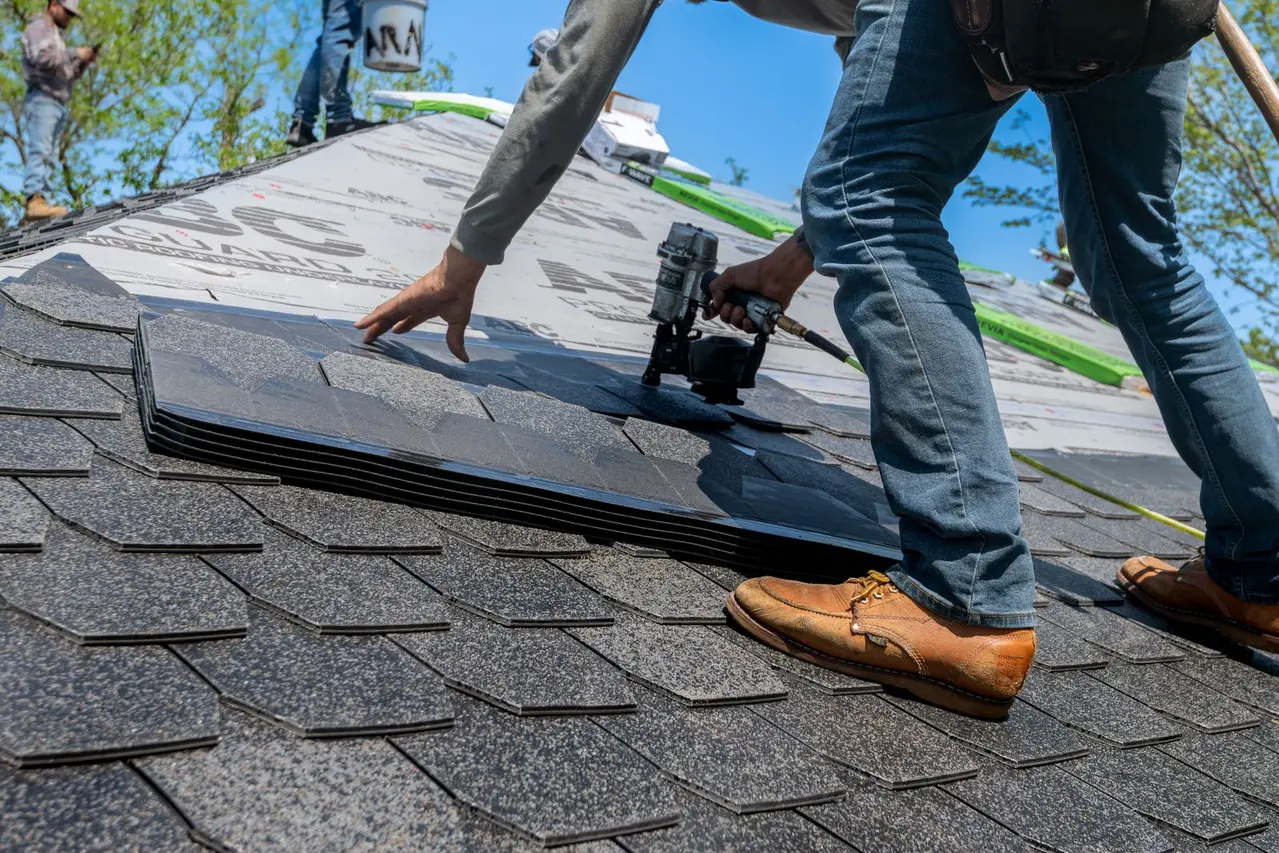
- A brand-new roof can look wavy at first. Atlas's cold-weather bulletin describes newly laid shingles continuing to relax and flatten with the sun's exposure over a few days after the job.
- If your new roof looks wavy and stays that way, the cause is usually under the shingles. The Asphalt Roofing Manufacturers Association (ARMA) says buckling "is most often the result of wrinkles in the roofing underlayment or movement of the wood decking."
- The pattern points to the cause. Lines that follow the joints in the deck suggest the deck moved. Random ripples that follow nothing suggest wrinkled underlayment.
- Many waves are cosmetic, but not all. GAF says underlayment wrinkles usually do not shorten shingle life, and that ridging from the deck can point to a more serious problem.
- What to do today: stay off the roof, photograph it, and ask your installer in writing to come and look. If the roofline itself dips or water is getting in, do not wait.
Match What You See to the Likely Cause
Wavy shingles, buckling shingles and shingles not laying flat usually have the same root: shingles are thin and flexible, so they take the shape of whatever they are nailed over. Owens Corning puts it this way: asphalt shingles "will conform to imperfections in the underlayment and the roof sheathing." Find the description below that is closest to your roof. It gives you a likely cause to raise with a roofer, not a final diagnosis.
1. Straight lines that form a grid
- What it looks like
- Long, straight ridges that cross each other, like the outline of big rectangles under the shingles.
- Likely cause
- The deck panels moved. GAF says the most common decking issue is plywood or other sheathing installed without proper spacing: as it expands, it pushes the shingles up in a grid-like pattern. ARMA says deck movement from moisture shows up in line with the joints in the deck.
- How much it matters
- Often appearance, but not always. GAF says that in most cases it is an aesthetic issue, and that ridging from the deck "can denote a more serious decking problem and may affect the long-term performance of the shingles."
- What to do next
- Ask what gap was left between panels. APA recommends 1/8 inch at all panel edges and ends, or what the panel maker requires, and says this is a recommendation and not a code requirement. A gap that looks closed later proves little, because APA says gaps can close through normal moisture-related expansion.
2. Wandering lines with no pattern
- What it looks like
- Soft ripples that run at odd angles and do not line up with anything. GAF calls them "mole runs."
- Likely cause
- Wrinkled underlayment. GAF says felt installed with wrinkles, or left wet and not allowed to dry, holds the shingles up. ARMA says wrinkled underlayment shows up at random across the roof and not in line with the deck joints.
- How much it matters
- Usually appearance. GAF: "While this condition is unsightly, it usually does not affect the longevity of the shingles."
- What to do next
- Ask whether the underlayment got wet before the shingles went on, and whether the attic is properly ventilated. Owens Corning and Atlas both put ventilation first, so moisture can escape. If the wrinkling stays, they describe taking off the affected shingles, cutting and flattening or replacing the felt, and shingling that area again.
3. The old roof's lines showing through
- What it looks like
- Rows and steps that repeat across the whole roof, as if another roof were underneath.
- Likely cause
- The new shingles went over an old layer. GAF says that when shingles are installed over an existing roof, any irregularities or unevenness in the old roof can telegraph through to the new shingles.
- How much it matters
- GAF describes the result as a non-uniform appearance. The unevenness is in the layer below, so it stays unless that layer comes off.
- What to do next
- Check your contract for the words tear-off or overlay, and ask which one was done.
4. Lines running along the boards of an older house
- What it looks like
- Parallel ridges that follow the deck boards, closer together than the 4-foot width of a standard panel.
- Likely cause
- A board deck. ARMA says shingles installed on dimensional lumber, also called a board or plank deck, may buckle because neighboring boards expand and contract by different amounts as their moisture changes.
- How much it matters
- It depends on the condition of the boards, which can only be judged from the attic or with the shingles off.
- What to do next
- Ask whether your deck is boards or panels, and whether any boards were replaced or covered during the job.
5. Raised edges after a fall or winter install
- What it looks like
- Shingle edges that look puffy or sit slightly raised, on a roof finished in cool weather.
- Likely cause
- The shingles have not relaxed or sealed yet. Atlas says shingles may become less flexible at about 40°F, that their sealant bonds after a few weeks of sufficient heat from sunlight, and that bundles draped over a ridge, especially below 70°F, may "take a set" and not lie flat when fastened.
- How much it matters
- Wind is the concern. Atlas says shingles installed in fall or winter without adequate surface temperatures "may never seal and must be hand sealed at the time of installation."
- What to do next
- Ask whether the shingles were hand-sealed, and what the maker of your shingles requires in cold weather. Instructions differ from one maker to another.
6. One bump or a few scattered ones
- What it looks like
- A raised spot here and there, with flat shingles around it.
- Likely cause
- Something specific under that shingle. ARMA lists nails not driven flush, shingles deformed by poor storage before installation, and foreign material under the shingles.
- How much it matters
- ARMA says these isolated distortions have very specific causes and very specific remedies.
- What to do next
- Point out each spot to your installer and have it opened and checked.
7. A dip or bow in the roofline itself
- What it looks like
- The ridge or the whole plane of the roof curves when you sight along it from the street.
- Likely cause
- The framing, not the shingles. APA says many reported buckling claims, on thorough field inspection, were traced to misaligned trusses, rafters or wall framing. ARMA separately warns of deck movement from structural deficiencies in the building.
- How much it matters
- ARMA calls the distortions from structural movement "generally catastrophic." Treat this as the most serious of the seven until someone has looked at the framing.
- What to do next
- Do not wait on it. Have the framing checked from the attic, and read our guide to roof sagging.
For more on the layers involved, see our guides to roof underlayment, roof decking, overlay versus tear-off, nail pops and roof sagging.
Sources, read November 23, 2026: ARMA, Plain Facts About Buckled Shingles; GAF bulletin TAB-R-137; APA Technical Note D481; Owens Corning, Asphalt Shingle Buckling; Atlas, Cold Weather Shingle Installation Recommendations.
How to Check Without Climbing on the Roof
Everything a homeowner needs for a first look can be done from the ground and the attic hatch.
- Look at different times of day. GAF says visual issues are usually noticeable only in certain lighting, so a roof can look rippled at one hour and flat at another. Note when the lines show.
- Photograph it from the same spots. Use the street and the yard, zoom in, and keep the dates. Photos taken now let you show whether the waves are growing or settling.
- Decide which pattern it is. Straight and regular points toward the deck. Random points toward the underlayment. A curve in the whole roofline points toward the framing.
- Look in the attic from the hatch. With a flashlight, look for dark or wet wood, stains and daylight. APA says that when buckling occurs after roofing and after the house is occupied, excess moisture from inside or inadequate ventilation should be suspected. Our roof ventilation guide explains what to look for.
- Stay off the roof. Atlas warns that shingles on an uneven surface, or that are slightly curved or buckled, "are very susceptible to breakage underfoot in frigid weather." Checking the framing with a taut line or straightedge, as APA suggests, is a job for a roofer with fall protection.
Why the Deck Matters on Essex County Houses
Two local facts make the deck worth asking about before and after a re-roof here.
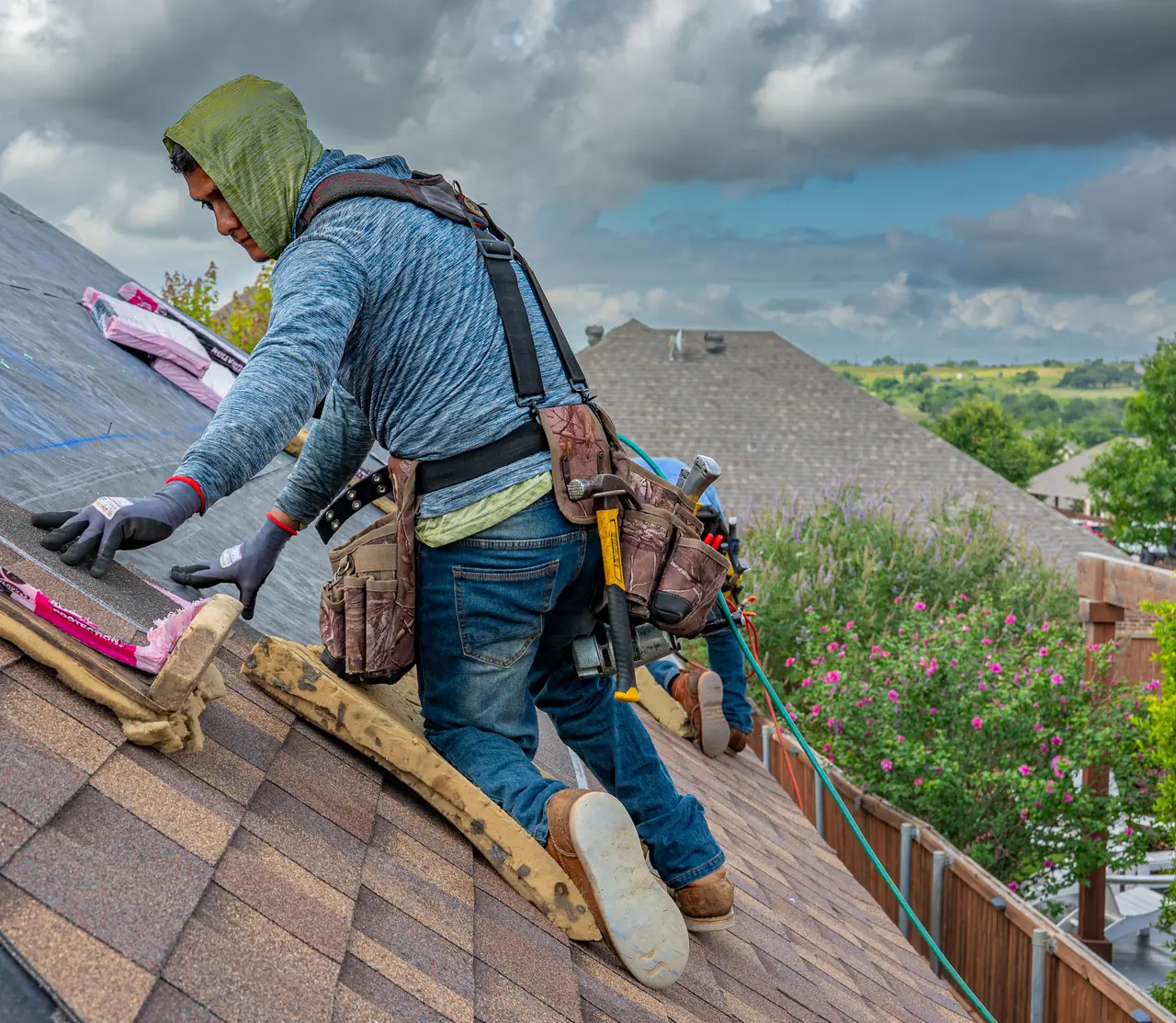
The housing is old. In the Census Bureau's 2020-2024 American Community Survey, 98,068 of Essex County's 336,962 housing units, or 29.1 percent, were built in 1939 or earlier. The figure is 17.4 percent for New Jersey and 11.7 percent for the United States. A house of that age may still have a board deck, and board decks are one of the causes ARMA names. When the old shingles come off, ask to see what is under them.
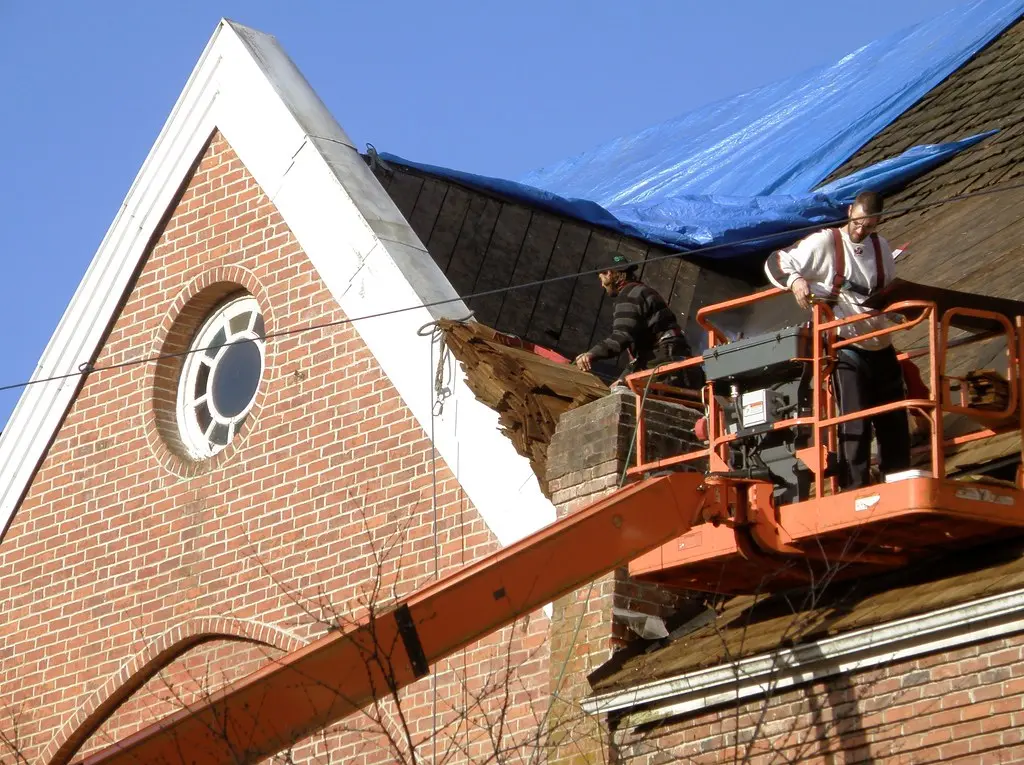
Decks here get wet. Newark Liberty International Airport averages 123.1 days a year with at least 0.01 inch of precipitation (NOAA 1991-2020 normals). ARMA says exposure to rain or dew during a roof replacement can lead the wood to absorb moisture and move. That is why the order of work matters, and why our guide on whether roofers can work in the rain covers what should happen when weather interrupts a job.
Sources, read November 23, 2026: U.S. Census Bureau, ACS 2020-2024 table B25034, through Census Reporter; NOAA NCEI 1991-2020 annual normals, Newark; ARMA.
Should You Wait or Call Now?
You may be told the roof will settle, and for newly laid shingles there is a basis for that. Atlas's cold-weather bulletin describes shingles flattening further with the sun's exposure over a few days, and cool shingles that continue "to relax from the sun" and "to flatten after the job is completed."
Where moisture is the cause, settling is not a matter of doing nothing. Atlas's buckling bulletin says to "allow moisture to escape the roofing system" and to ventilate the attic, adding exhaust fans if needed. Once the system reaches the proper moisture content, it says, "the roof should lie flat and the buckling problem should not return." It also says: "When buckling persists, remove and replace the affected shingles."
The buckling bulletins we read do not say how long a moved deck or wrinkled underlayment should take to settle. So waiting is reasonable only with a date attached: have your installer look now, agree in writing on when you will both look again, and keep your photos.
Call now, without waiting, if you see
- A dip or bow in the ridge or the plane of the roof
- Water stains on a ceiling or wet wood in the attic
- Shingles lifted, torn or missing
- A ceiling that is cracking or sagging below the roof
If water is coming in, see our emergency roof repair page. R&E Roofing takes emergency calls on nights and weekends.
What the repair usually involves
ARMA's order is to find and fix the root cause first, then reinstall the shingles flat or put on new ones if the old ones were damaged. For wrinkled underlayment, Owens Corning starts with better roof ventilation so moisture can escape. If that does not resolve the wrinkling, it says to remove the shingles from the affected area, cut out the wrinkled felt, replace it with new underlayment and install new shingles. Our roof ventilation guide covers the first step. A deck or framing problem makes the job larger, and only a look at the deck will tell you how much larger. Our roof repair cost guide covers typical repair costs in New Jersey, and our roof repair page explains how we work. If the roof is near the end of its life anyway, compare the repair with a roof replacement.
Sources, read November 23, 2026: Atlas, Facts about Buckled Shingles; Atlas, Cold Weather Shingle Installation Recommendations; ARMA; Owens Corning.
Who Answers for It in New Jersey
Start with whoever installed the roof. A shingle warranty may not help here. GAF's bulletin says its shingle limited warranty covers manufacturing defects and "does not cover shading or telegraphing," and that it does not warrant the roofer's workmanship or problems caused by substrates or underlayment. Other makers' terms differ, so read yours. Our roof warranty guide explains the difference between a material warranty and a workmanship warranty.
Questions to put to your installer in writing:
- Was the old roof torn off, or were shingles laid over it?
- Is the deck made of panels or boards, and was any of it replaced?
- Was the deck dry when the underlayment went on?
- Which underlayment was used, and did it get wet?
- If it was cold, were the shingles hand-sealed?
- When can you come and look, and what will you do if it stays?
New Jersey's rules give you a paper trail. The state's residential code, section R903.1, requires roof assemblies to be installed in accordance with the code and "the approved manufacturer's instructions." The Division of Consumer Affairs says home improvement contractors must use written contracts for jobs that cost more than $500 and must display their registration number in all advertisements, on business cards, on their commercial vehicles and on all business documents.
If the installer stops answering, look up the business on the state's registration search (our contractor lookup guide walks through it), then consider a complaint to the Division of Consumer Affairs. The Division says information you submit may be publicly disclosed, so leave out anything sensitive. This is general information and not legal advice.
Want a second opinion? R&E Roofing's office is at 573 Valley St in Orange. Ask for a roof inspection and tell us when the roof went on and which pattern you see.
Sources, read November 23, 2026: GAF bulletin TAB-R-137; UpCodes, New Jersey One- and Two-Family Dwelling Subcode 2024, section R903.1; NJ Division of Consumer Affairs, contractor FAQ.
Roof Repair in the Towns Around Orange
Our pages for the towns nearest the office:
Questions Homeowners Ask About Wavy Roofs
Is it normal for a new roof to look wavy?
It is common enough that ARMA, GAF, Owens Corning and Atlas have each published a bulletin on it, but it should not be waved off without a look. GAF says the majority of visual issues do not harm the roof's performance, and also says ridging caused by the deck can point to a more serious decking problem. The pattern on your roof is what separates the two.
Will wavy shingles flatten out on their own?
Sometimes. Atlas's cold-weather bulletin describes newly laid shingles continuing to relax and flatten with the sun's exposure over a few days. Where moisture is the cause, Atlas says to let it escape and to ventilate the attic. Once the roofing system reaches the proper moisture content the roof should lie flat, and if buckling persists the affected shingles should be removed and replaced. The buckling bulletins we read do not say how long a moved deck or wrinkled underlayment should take to settle, so get a dated recheck from your installer in writing.
Does a wavy roof mean it will leak?
Not necessarily. GAF says wrinkled underlayment usually does not affect shingle life, while ridging from the deck may affect long-term performance. Water stains on a ceiling, wet wood in the attic or missing shingles are a different matter and should be looked at right away.
Can a wavy roof be fixed without replacing the whole roof?
The makers' bulletins describe a repair limited to the affected area. Owens Corning and Atlas both start with ventilation so moisture can escape. If the wrinkling or buckling stays, they describe removing the shingles there, correcting the wrinkled underlayment and shingling it again. ARMA says to find and fix the root cause first, so a deck or framing problem can make the job larger.
Does the shingle warranty cover a wavy roof?
Often not. GAF's bulletin says its shingle limited warranty covers manufacturing defects and does not cover shading or telegraphing, the roofer's workmanship, or problems caused by substrates or underlayment. Other makers' terms differ, so read your own warranty and your contract with the installer.
Why did my roof look fine at first and then turn wavy?
Wood moves with moisture. APA says an unrestrained 4 by 8 foot panel typically changes about 1/8 inch in width or length as relative humidity moves between 40 and 80 percent. If buckling appears after the roof is on and the house is lived in, APA says excess moisture from inside or inadequate ventilation should be suspected.
Sources
All read November 23, 2026.
- Asphalt Roofing Manufacturers Association, Plain Facts About Buckled Shingles (revised March 2024)
- GAF, Technical Advisory Bulletin R-137, Visual Issues with Shingled Roofs (PDF)
- APA, The Engineered Wood Association, Technical Note D481, Minimizing Buckling of Wood Structural Panels (July 2024) (PDF copy)
- Owens Corning, Technical Bulletin: Asphalt Shingle Buckling (August 2023, PDF)
- Atlas Roofing, Facts about Buckled Shingles (January 2016, PDF)
- Atlas Roofing, Cold Weather Shingle Installation Recommendations (PDF)
- U.S. Census Bureau, American Community Survey 2020-2024 5-year estimates, table B25034, through Census Reporter
- NOAA NCEI, 1991-2020 annual normals, Newark Liberty International Airport (station USW00014734)
- UpCodes, New Jersey UCC One- and Two-Family Dwelling Subcode 2024, Chapter 9, section R903.1
- New Jersey Division of Consumer Affairs, Home Improvement Contractor Business FAQ
- New Jersey Division of Consumer Affairs, File a Complaint