Townhouse and Condo Roof Replacement Cost in New Jersey: 2026 Prices and Who Pays
The Short Answer
- A townhouse roof costs $4,500 to $10,600 in asphalt shingles and $7,000 to $28,300 in metal. That is HomeGuide's range for a townhouse.
- By size, in shingles: $4,500 to $6,700 at 1,000 square feet and $5,300 to $10,600 at 1,500 square feet, in the same HomeGuide table.
- Who pays, in a condominium: New Jersey's Condominium Act makes the roofs common elements, unless the master deed reserves a roof to particular units, and the association replaces common elements as a common expense.
- Since January 8, 2024, every association of a planned real estate development in New Jersey, condominium or homeowners association, must fund a capital reserve study with a 30-year funding plan, unless its common area capital assets total less than $25,000.
- A new roof carries no New Jersey sales tax on the contractor's charges once the property owner gives the contractor Form ST-8. Replacement shingles on part of a roof are a taxable repair, at New Jersey's 6.625% rate.
- Ask your town about the permit. The state's no-permit list names roof coverings on detached one- and two-family homes; a townhouse is attached.
What a Townhouse Roof Costs
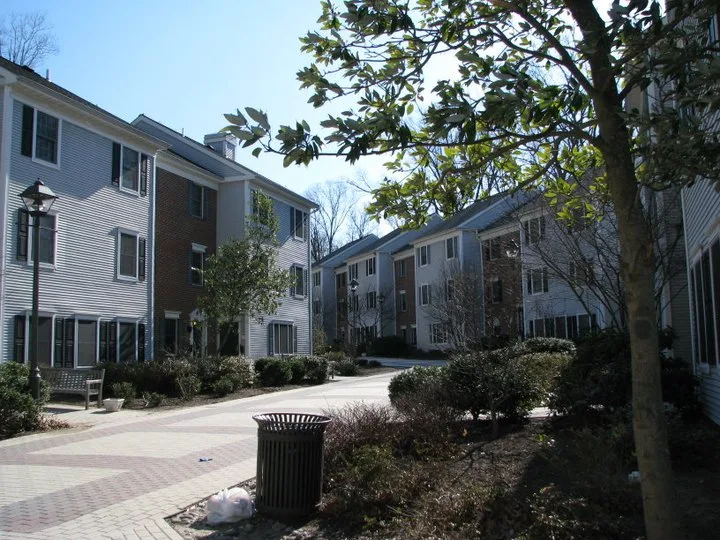
Of the three national cost guides on this page, HomeGuide is the one with a table of its own for townhouses. It puts a townhouse roof at $4,500 to $10,600 for asphalt shingles and $7,000 to $28,300 for metal, and describes a typical townhouse as 18 to 25 feet wide, 35 to 60 or more feet deep, and two to three stories tall.
| Roof material | 1,000 sq ft | 1,500 sq ft |
|---|---|---|
| Asphalt shingles | $4,500 to $6,700 | $5,300 to $10,600 |
| Metal | $7,000 to $17,900 | $8,900 to $28,300 |
These are national figures, not R&E's prices. For one state figure, HomeGuide's table of costs by location puts the average new roof in New Jersey at $5,500 to $15,500; that row is for new roofs in general, not townhouses. For a whole detached house, see our roof replacement cost guide for New Jersey, or put your own measurements into the roof replacement cost calculator.
Source, read November 27, 2026: HomeGuide, roof replacement cost.
Prices by Roof Size From Three Guides
Roofers price by the area of the roof, not the floor area of the home. Here is what each of three national guides publishes for roofs of townhouse size, in the rows nearest each size. Each guide measures its own way, so read across with care: HomeGuide's rows assume a single-story home with a 6:12 roof pitch, while Angi and Fixr list roof area only.
| Roof area | HomeGuide | Angi | Fixr |
|---|---|---|---|
| About 1,000 to 1,120 sq ft | $3,500 to $6,700 (1,120 sq ft of roof) | $4,900 to $12,300 (1,120 sq ft) | $3,750 to $11,000 (1,000 sq ft) |
| About 1,200 to 1,340 sq ft | $4,000 to $8,000 (1,340 sq ft of roof) | $5,800 to $14,700 (1,340 sq ft) | $4,500 to $13,200 (1,200 sq ft) |
| About 1,500 to 1,675 sq ft | $5,000 to $10,100 (1,675 sq ft of roof) | $6,800 to $17,200 (1,565 sq ft) | $5,625 to $16,500 (1,500 sq ft) |
| About 1,700 to 1,790 sq ft | $5,500 to $10,700 (1,790 sq ft of roof) | $7,800 to $19,700 (1,790 sq ft) | $6,375 to $18,700 (1,700 sq ft) |
Angi gives a national average of $9,612 for a roof replacement in 2026, from 32,999 verified projects, with most homeowners paying $5,903 to $13,381. Fixr gives an average of $4.75 per square foot and a range of $3.75 to $11. Angi also says an unusually steep roof pitch can add $1,000 to $3,000.
Roof estimates are often quoted by the square: one square covers 100 square feet of roof. HomeGuide puts a new roof at $300 to $600 per square on average, including materials and installation, so a quote for 12 squares is a quote for about 1,200 square feet.
The Extras That Add to a Bill
HomeGuide lists these as separate costs. When you compare two quotes, check which of them each one includes.
| Item | Cost |
|---|---|
| Tearing off the old shingles or metal | $1 to $3 per square foot |
| Replacing rotted or damaged decking (sheathing) | $2 to $5 per square foot installed |
| Roof vents | $200 to $700 |
| Drip edge | $1.50 to $3.00 per linear foot |
| Fascia replacement | $5 to $12 per linear foot |
| Gutter replacement | $12 to $25 per linear foot |
| Roof replacement permit | $100 to $500, depending on location |
HomeGuide's tear-off cost runs $1 to $5 per square foot depending on the type of roofing and the number of layers; the table gives its figure for shingles or metal. HomeGuide also notes that a full replacement may require replacing the decking under the old roof. Our guide to roof decking explains what the deck is and when it has to be replaced. Some condominium buildings have flat roofs; for those, see the flat roof replacement cost guide.
Source, read November 27, 2026: HomeGuide, roof replacement cost.
Who Pays for the Roof in New Jersey
The answer starts with what you own. This section quotes the law; it is not legal advice, and your own documents decide your case.
In a condominium
- The roofs are common elements. New Jersey's Condominium Act defines the common elements, as to any improvement, as "the foundations, structural and bearing parts, supports, main walls, roofs, basements, halls ... excluding any specifically reserved or limited to a particular unit or group of units" (N.J.S.A. 46:8B-3).
- Some common elements are limited to certain units. The same section calls them limited common elements: "those common elements which are for the use of one or more specified units to the exclusion of other units." Your master deed says whether the roof over your unit is one.
- The association replaces them. Under N.J.S.A. 46:8B-14, the association is responsible for "the maintenance, repair, replacement, cleaning and sanitation of the common elements," and the costs are common expenses.
- Storm damage. The same section makes the association responsible for insurance against loss by fire or other casualties, covering all common elements and all structural portions of the condominium property. If a storm damaged the roof, see our guide to roof insurance claims in New Jersey.
In a townhouse community that is not a condominium
The Condominium Act's definitions are for condominiums. If your townhouse is not a condominium unit, the community's own declaration and bylaws say who maintains and replaces the roof. Ask the association's manager for the section that covers roofs before you collect quotes.
Sources, read November 27, 2026: N.J.S.A. 46:8B-3; N.J.S.A. 46:8B-14.
The 2024 Reserve Study Law and Your Roof
New Jersey's Structural Integrity Law, P.L.2023, c.214, took effect on January 8, 2024. Besides structural inspections, it changed how condominium and homeowners associations save for big repairs such as a roof:
- A capital reserve study. Any association of a planned real estate development must undertake and fund a capital reserve study that assesses whether its reserves can meet the anticipated costs of replacing or repairing the capital assets it is obligated to maintain (N.J.S.A. 45:22A-44.2).
- Every five years. The study must be reviewed by one of the professionals the statute names (a licensed architect, an engineer, or a reserve specialist who holds a credential), and conducted and reviewed at least once every five years.
- A 30-year funding plan. The association must obtain a reserve study with a 30-year funding plan, meant to ensure it has adequate reserve funds to repair or replace the capital assets on the common elements it must maintain without a special assessment or loan, except as the law permits (N.J.S.A. 45:22A-44.3).
- The 85% option, and what a buyer is shown. An association that existed on January 8, 2024 may fund its reserve at 85% of a funding plan in its latest study. If the board chooses that, it must first send every unit owner a notice in 20-point bold type giving the year a special assessment or loan is expected and its amount, and a seller must give a buyer a copy of the latest notice before the purchase contract is signed. The option is temporary: an association may use it for no more than five of its fiscal years after a 2025 amendment (P.L.2025, c.132) took effect.
- Small associations. The study rule does not apply to an association with less than $25,000 in total common area capital assets.
The Department of Community Affairs says the reserve study rule applies to all such associations, not only those whose buildings need the law's structural inspections, and it lists roofs among the common areas a condominium association typically maintains. The structural inspections themselves apply to "covered buildings": condominium or cooperative buildings whose primary load bearing system is concrete, masonry, steel or a hybrid structure. The law's excluded structures include frame-built construction with combustible walls or roofs, apart from a podium deck that such a building sits on.
If you are buying a townhouse or condo, ask the seller or the association for the latest reserve study and see what it plans for the roof.
Sources, read November 27, 2026: N.J.S.A. 45:22A-44.2; N.J.S.A. 45:22A-44.3; Department of Community Affairs, reserve study FAQ.
Permits and Sales Tax in New Jersey
The permit
New Jersey's construction code lists "the repair or replacement of existing roof covering on detached one- and two-family dwellings" as ordinary maintenance, for which no permit, no inspection and no notice to the enforcing agency is required (N.J.A.C. 5:23-2.7). That item names detached homes. A townhouse is attached, and the code says its list is not all-inclusive, so ask your town's construction office before the work starts. Ordinary maintenance does not include the removal or cutting of any structural beam or bearing support, or any work affecting structural or fire safety.
Sales tax
- A new roof: no sales tax on the contractor's charges. The Division of Taxation says the installation of a new roof is an exempt capital improvement, and that the property owner must give the contractor a fully completed Certificate of Exempt Capital Improvement (Form ST-8).
- Replacement shingles on part of a roof: taxable. The Division says that installing replacement shingles is repairing real property and the charges are subject to tax. New Jersey's rate is 6.625%.
Sources, read November 27, 2026: N.J.A.C. 5:23-2.7; New Jersey Division of Taxation.
What a Townhouse Roof Quote Should Name
- Whose roof it is, and who signs. In a New Jersey condominium the roof is a common element unless the master deed reserves it to particular units, and the association is responsible for replacing common elements. Before you sign anything for a condo roof, ask the board or the manager in writing whether the roof over your unit is a common element, a limited common element or yours.
- Tear-off, and the price for bad decking. HomeGuide prices tear-off of shingles or metal at $1 to $3 per square foot and decking at $2 to $5 per square foot installed. Ask for the decking price per sheet or per square foot in writing, so rot found under the old roof has a known cost.
- Where your roof meets the neighbors'. If your roof joins the roof next door, ask the roofer to say in the quote how the new roofing, flashing and underlayment will be finished where the two meet.
- The permit. See the New Jersey section above. Ask who will contact the town's construction office and who pays the permit fee.
- The sales tax line. A new roof is an exempt capital improvement in New Jersey once the property owner gives the contractor Form ST-8; replacement shingles on part of a roof are a taxable repair. The quote should say which it is.
- How long it takes. HomeGuide says an asphalt shingle roof replacement takes 1 to 3 days and a metal roof 1 to 5 days.
For a full replacement, see R&E's roof replacement page; for a leak or storm damage on one section, see the roof repair page.
Sources, read November 27, 2026: HomeGuide; N.J.S.A. 46:8B-3; N.J.S.A. 46:8B-14; N.J.A.C. 5:23-2.7; New Jersey Division of Taxation.
Roof Replacement in the Towns Around Orange
R&E Roofing works from 573 Valley St in Orange. Each page below covers roof replacement in that town:
Questions Owners Ask About Townhouse and Condo Roofs
How much does it cost to replace a townhouse roof?
HomeGuide puts it at $4,500 to $10,600 for asphalt shingles and $7,000 to $28,300 for metal. In shingles, its townhouse table gives $4,500 to $6,700 at 1,000 square feet and $5,300 to $10,600 at 1,500 square feet. HomeGuide describes a typical townhouse as 18 to 25 feet wide, 35 to 60 or more feet deep, and two to three stories tall.
Who pays for a condo roof in New Jersey?
Under New Jersey's Condominium Act, the roofs are common elements, except any the master deed specifically reserves or limits to a particular unit or group of units, and the association is responsible for the maintenance, repair and replacement of the common elements, as common expenses. Your master deed and bylaws say what is reserved to your unit, so read them or ask the board.
Do I pay for my own roof in a townhouse community that is not a condominium?
The Condominium Act's rules above are for condominiums. If you own a townhouse in a community that is not a condominium, the community's own declaration and bylaws say who maintains and replaces the roof. Ask the association's manager for the section that covers roofs before you get quotes.
Does a New Jersey HOA have to save money for the roof?
Since January 8, 2024, every association of a planned real estate development in New Jersey must undertake and fund a capital reserve study with a 30-year funding plan, conducted and reviewed at least once every five years, unless it has less than $25,000 in total common area capital assets. The Department of Community Affairs lists roofs among the common areas a condominium association typically maintains.
Do I need a permit to replace a townhouse roof in New Jersey?
New Jersey's construction code lists the repair or replacement of the existing roof covering on detached one- and two-family dwellings as ordinary maintenance, with no permit and no notice. That item does not name attached homes such as townhouses, and the code says its list is not all-inclusive, so ask your town's construction office before the work starts.
Do I pay New Jersey sales tax on a new townhouse roof?
Not on the charges for a new roof, once the property owner gives the contractor a completed Form ST-8: the Division of Taxation says the installation of a new roof is an exempt capital improvement. Installing replacement shingles on part of a roof is a repair, and the Division says those charges are taxable. New Jersey's sales tax rate is 6.625%.
Sources
All read November 27, 2026.
- HomeGuide, How much does a roof replacement cost? (Kristen Cramer, November 7, 2025)
- Angi, How Much Does Roof Replacement Cost? (Mizuki Hisaka, reviewed by Ami Feller, updated October 22, 2026)
- Fixr, roof replacement cost (Dan Simms, updated February 4, 2026)
- N.J.S.A. 46:8B-3, Condominium Act definitions (2025 New Jersey Revised Statutes, Justia)
- N.J.S.A. 46:8B-14, Responsibilities of association (2025 New Jersey Revised Statutes, Justia)
- N.J.S.A. 45:22A-44.2, capital reserve study (2025 New Jersey Revised Statutes, Justia)
- N.J.S.A. 45:22A-44.3, reserve study, 30-year funding plan (2025 New Jersey Revised Statutes, Justia)
- New Jersey Department of Community Affairs, Structural Integrity Law Capital Reserve Studies and Funding FAQ (PDF)
- New Jersey Administrative Code, N.J.A.C. 5:23-2, Uniform Construction Code, Administration and Enforcement (PDF, New Jersey Department of Community Affairs)
- New Jersey Division of Taxation, Sales and Use Tax, Frequently Asked Questions (disaster recovery)
- New Jersey Division of Taxation, Form ST-8, Certificate of Exempt Capital Improvement (PDF)