Chimney Repair in Essex County, NJ
R&E Roofing repairs chimneys across Essex County from its office in Orange: rebuilds, repointing, crowns, flashing, caps and chimney leaks. We show you a photo of what failed and give you a written, itemized estimate before any work starts.
Water coming in around the chimney now? Catch it, keep it away from electricity, photograph it, and call. R&E takes emergency calls on nights and weekends.
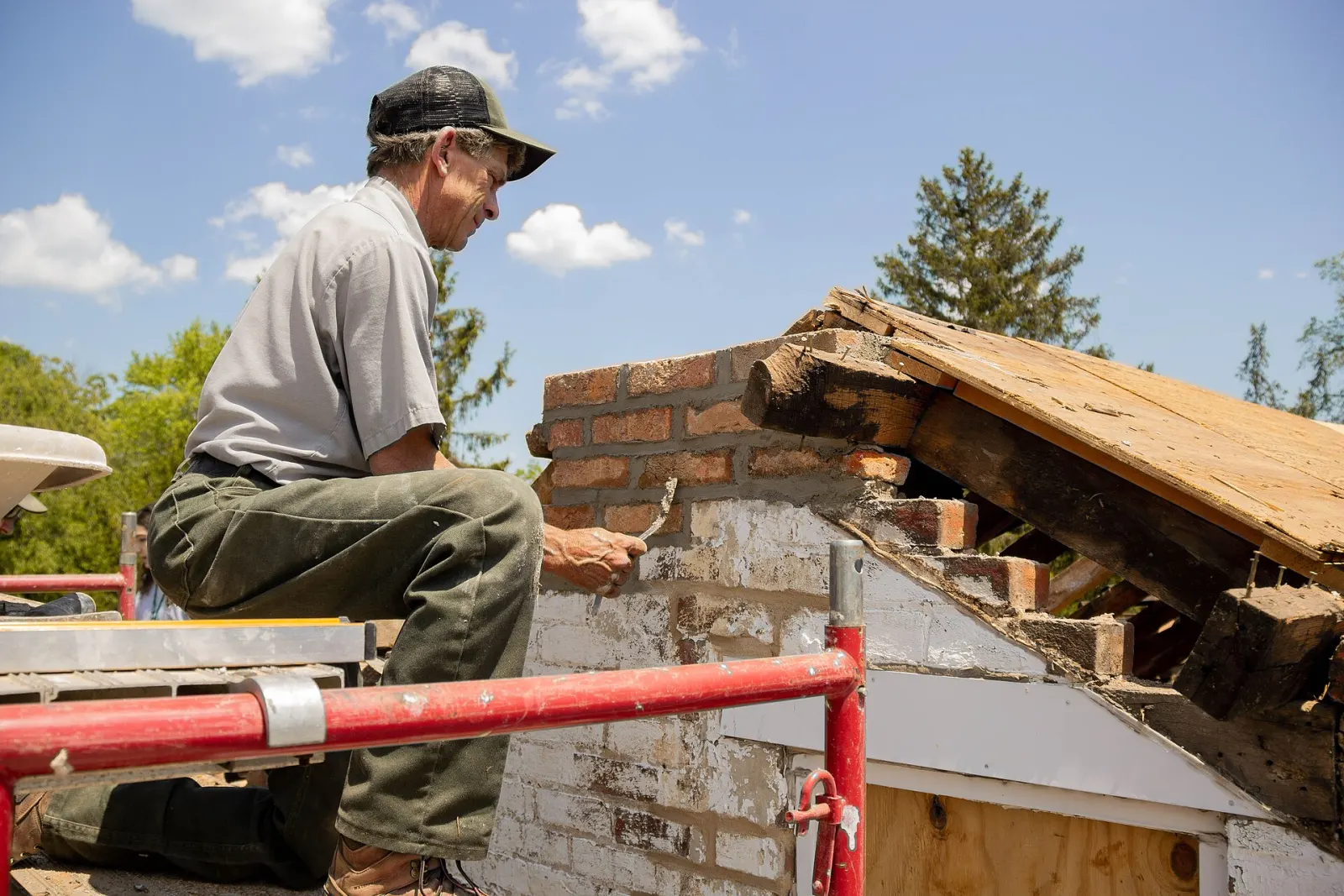
Signs your chimney needs repair
Most of these can be seen from the yard, the attic or the room with the fireplace. Each one points to a different repair.
Water stains on the ceiling or wall next to the chimney
Usually the flashing where the chimney meets the roof, or water soaking through the brick above the roofline.
Gaps or crumbling mortar between the bricks
Joints that have weathered out. They let water into the chimney and need repointing.
Brick faces flaking or popping off (spalling)
Water got into the brick and froze. Those bricks are replaced and the water source is fixed.
Cracks in the cement slab on top of the chimney
A failing crown. Water runs through it straight into the chimney.
White powder streaks on the brick
Salt left behind by water moving through the masonry. It points to a wet chimney.
Rust stains, or a damper or firebox that looks rusty
Water coming down the flue, often a missing or damaged cap.
Bricks or mortar pieces on the roof or the ground
The top of the chimney is coming apart and may need rebuilding above the roofline.
A chimney that leans or pulls away from the house
A structural problem. Stay clear of it and call to have it looked at.
Look from the ground, the attic or the room, not from the roof. Checking a chimney up close is a job for someone set up to work on a roof safely.
Request a chimney repair estimate
Tell us the town and what you are seeing: a stain, loose bricks, a cracked top or water coming in. Pick Chimney Repair in the service list.
Or call (667) 204-1609Office hours are Monday to Friday, 9 to 5. Emergency calls are taken on nights and weekends. Forms sent after hours are answered during office hours.
Your chimney, in a few lines
Choose Chimney Repair, or Emergency Roof Repair if water is coming in now.
The chimney repairs R&E does
A chimney is a brick stack standing in the weather with a hole through the roof around it. These are the repairs that keep it standing and keep water out.
Repointing (tuckpointing)
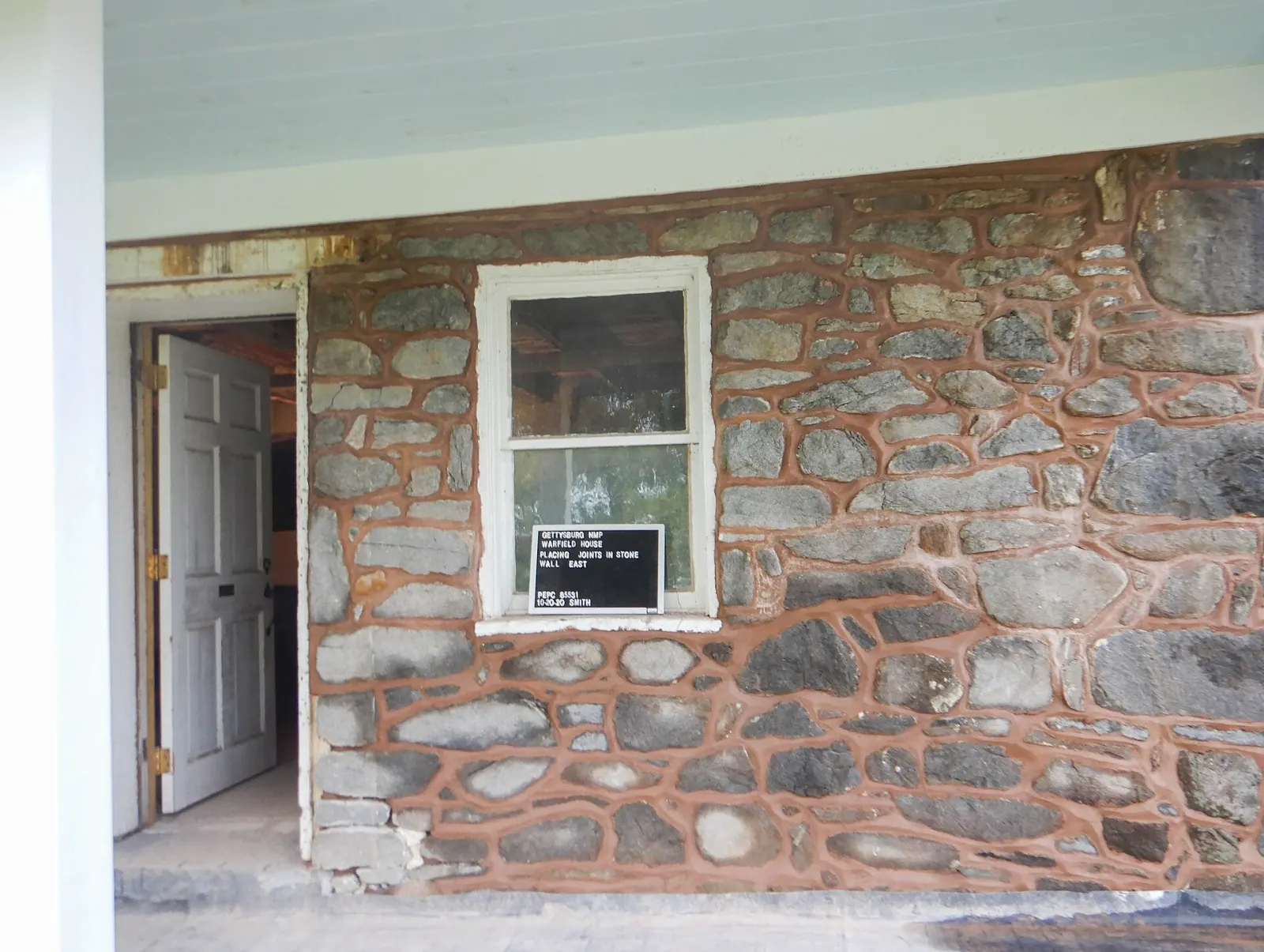
The worn mortar is cut out of the joints to a sound depth and new mortar is packed in. On older brick, the new mortar has to be softer than the brick, so the joint gives way before the brick does.
Crown repair and replacement
The crown is the slab that caps the brick around the flue. Small cracks can be sealed. A crown that is broken up, or was only a thin coat of mortar, is replaced with one that slopes away from the flue and sheds water past the walls.
Chimney flashing
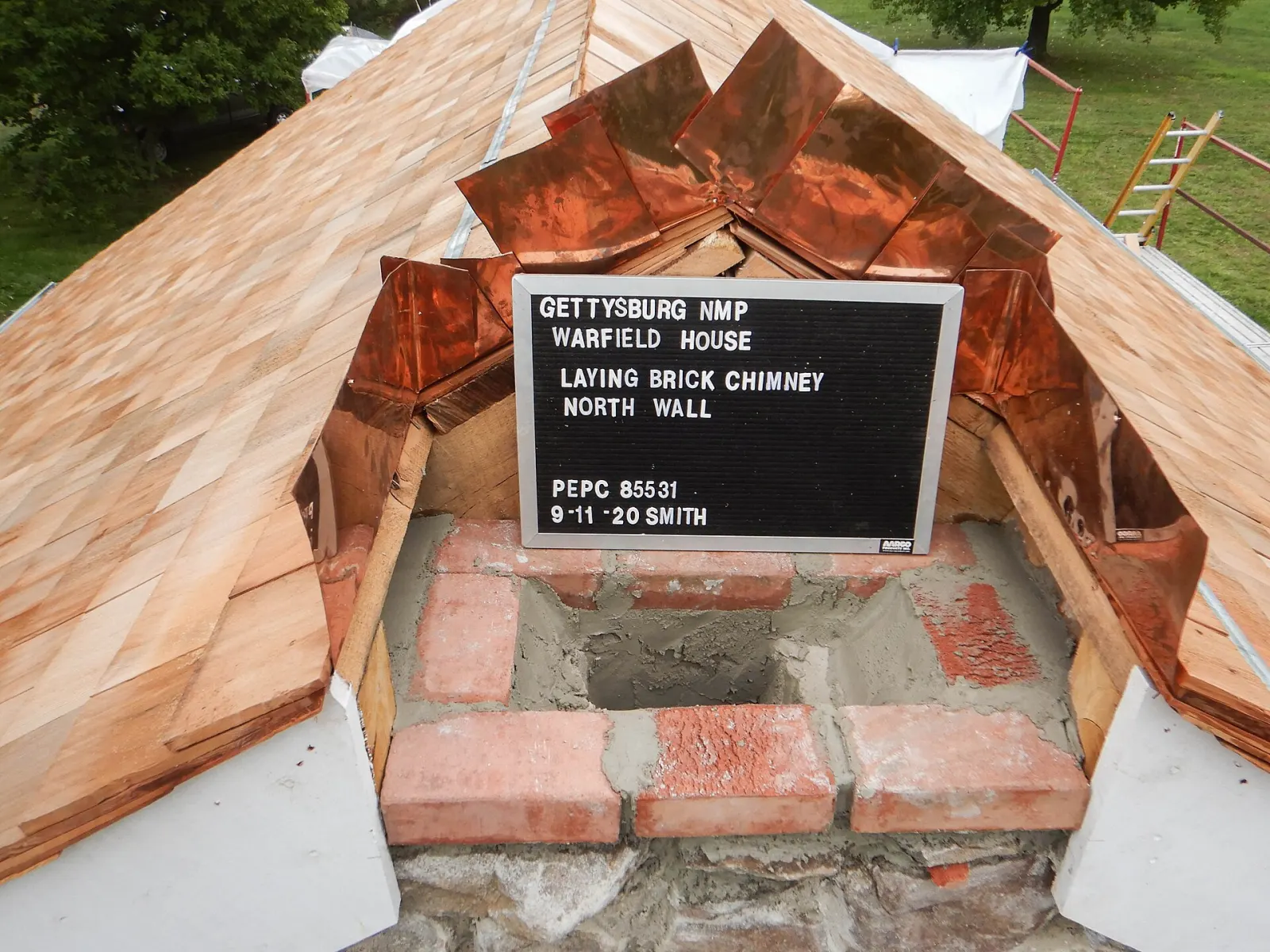
Step flashing under the shingles and counter flashing set into the brick, so the roof and chimney can move without opening a gap. Tar or caulk smeared over the joint is not a repair.
Chimney flashing repairChimney caps
A cap keeps rain, animals and debris out of the flue. Missing, rusted or loose caps are replaced and sized to the flue.
Chimney cap installationRebuilding the top of the chimney
When bricks are loose, cracked through or the stack leans above the roof, the chimney is taken down to sound masonry and rebuilt, then flashed and capped again.
Brick replacement
Spalled or cracked bricks are cut out and replaced with brick that matches in size and color, bedded in mortar that suits the old wall.
Chimney leak repair
We trace the water to the crown, cap, flashing or brick that is letting it in, show you, and repair that. A chimney leak is often a roof leak at the chimney.
Roof leak repair
Why Essex County chimneys wear out
Two things work against a chimney here: the age of the houses and the weather. Both are in public records.
- Old houses, old mortar. 29.1% of Essex County’s housing units were built in 1939 or earlier, and 38.2% before 1950 (U.S. Census Bureau, ACS 2020-2024). Brick and mortar that old have been through decades of weather.
- Water does the damage. The Chimney Safety Institute of America puts it plainly: “water causes more damage to masonry chimneys than fire,” and “common brick is like a sponge” (CSIA).
- Freeze and thaw. Newark averages 79.9 nights a year at or below 32°F but only 14.5 days that stay below freezing all day (NOAA 1991-2020 normals). So on roughly 65 days a year, water in the brick and mortar freezes and thaws again, which opens joints and flakes brick faces.
- Plenty of water to start with. Newark averages 46.6 inches of precipitation a year, with about 12 days of an inch or more, and 31.5 inches of snow (NOAA).
Why the right mortar matters on an old chimney
Hard modern mortar in an old brick chimney can do more harm than good. The National Park Service’s repointing guidance says new mortar should be “softer or more permeable than the masonry units and no harder or more impermeable than the historic mortar to prevent damage to the masonry units” (NPS Preservation Brief 2). When the mortar is harder than the brick, the brick cracks instead of the joint.
Where the chimney meets the roof
Many chimney leaks are roof leaks at the chimney. R&E is a roofer, so the roof side of the chimney is part of every chimney repair.
- Two-part flashing. Step flashing is woven into the shingles and counter flashing comes out of the brick and laps over it. The Mason Contractors Association of America calls leaving the flashing out and using caulk in its place “considered inferior workmanship” (MCAA).
- A cricket behind wide chimneys. When a chimney is more than 30 inches wide across the slope, “a cricket is usually required” (MCAA): a small peaked roof behind the chimney that splits the water around it instead of letting it pond.
- A crown that sheds water. The top should have “a positive slope away from the center” so water drains off the edges, not toward the flue (MCAA).
How a chimney repair with R&E goes
You call or send the form
Tell us the town, what you are seeing (a stain, loose bricks, a leak) and whether water is coming in now.
We look at the chimney from the roof
The crown, cap, mortar joints, brick and the flashing where the chimney meets the roof, and inside the attic or at the stain when we can.
We photograph what failed and show you
You see the cracked crown, open joints, loose flashing or damaged brick, and what it is doing to the house.
You get a written, itemized estimate
Each repair is on its own line, so you can see what stops the water now and what can wait.
We do the repair in workable weather
Masonry and mortar need the right temperature to set. If it is too cold or wet, the opening is protected and the work follows when the weather allows.
Timing matters. The same NPS guidance says wall temperatures between 40 and 95 degrees F keep the water in fresh mortar from freezing or drying out too fast (NPS Preservation Brief 2), so mortar work is best done before the cold sets in.
What changes the cost of a chimney repair
R&E prices each chimney after seeing it. These are the things that move the number:
- What needs doing: a cap or a crown seal is small; repointing the whole stack or rebuilding the top is large.
- How much of the chimney is above the roof, and how steep and high the roof is.
- Brick and mortar that have to be matched on an older house.
- Whether the flashing and the shingles around the chimney are part of the repair.
- Damage the water has already done inside: wet framing, ceilings or insulation.
For published cost ranges by repair type, read our chimney repair cost guide for New Jersey. For caps alone, see chimney cap cost in NJ.
Chimney repair questions from Essex County homeowners
What is the average cost to repair a chimney?
It depends on the repair. Sealing a crown or replacing a cap is a small job; repointing a whole chimney or rebuilding the top above the roof is much larger. R&E gives a written, itemized estimate after seeing the chimney. For published cost ranges by repair type, see our chimney repair cost guide.
Will insurance cover a leaking chimney?
It depends on the cause and your policy. Sudden damage, such as a storm or a falling limb, is often treated differently from a leak caused by wear. Photograph the damage, note the date and the weather, and call your insurer. R&E provides photo-documented, itemized estimates that you can give your carrier.
Is it normal for a chimney to leak during heavy rain?
No. A chimney that leaks in heavy rain is letting water in somewhere: a cracked crown, a missing cap, loose flashing where it meets the roof, or open mortar joints. Wind-driven rain finds those gaps first. Note where the water shows up and the wind direction; it helps find the source.
Can cracks in a chimney be repaired?
Usually. Hairline cracks in a crown can be sealed, and a broken crown can be replaced. Cracked or open mortar joints are repointed. Cracked or flaking bricks are cut out and replaced. If cracks run through the chimney or the top is loose or leaning, that section is rebuilt.
Should my chimney be repaired or rebuilt?
Repair when the brick is sound and the problem is joints, the crown, the cap or the flashing. Rebuild the top when bricks are loose or broken through, the stack leans, or repairs keep failing. We show you photos and explain which it is and why.
What is the difference between repointing and tuckpointing?
Both mean cutting out worn mortar and filling the joints with new mortar. Tuckpointing traditionally adds a thin contrasting line on top for looks; for most chimney repairs people use the two words for the same job.
When is the best time of year for chimney repair?
Before winter. The National Park Service's repointing guidance says wall temperatures between 40 and 95 degrees F prevent the water in fresh mortar from freezing or drying out too fast. A leaking chimney also gets worse over a winter of freezing and thawing.
Do you take emergency calls?
Yes. R&E takes emergency calls on nights and weekends. The office is open Monday to Friday, 9 to 5. Forms sent after hours are answered during office hours.
Chimney repair near you: Essex County towns served from Orange
R&E’s office is in Orange, and its service area is Essex County: Newark, East Orange, Irvington, Bloomfield, West Orange, Montclair, Belleville, Livingston, Nutley, Maplewood, Orange, South Orange, Millburn, Verona, Cedar Grove, Glen Ridge, Caldwell, West Caldwell, North Caldwell, Roseland, Essex Fells, Fairfield.
Office and hours
R&E Roofing573 Valley St, Orange, NJ 07050
(667) 204-1609
Office hours are Monday to Friday, 9 to 5. Emergency calls are taken on nights and weekends.
Sources
Weather and housing figures read October 22, 2026. Photos are public domain and shown to illustrate, not as R&E jobs.
- NOAA NCEI, 1991-2020 annual climate normals, Newark Liberty International Airport (USW00014734), read October 22, 2026
- U.S. Census Bureau, American Community Survey 2020-2024 5-year estimates, table B25034 (Year Structure Built), Essex County, NJ, read October 22, 2026
- Chimney Safety Institute of America, Four Low-Cost Recommendations to Prevent Major Water Damage
- Mason Contractors Association of America, Masonry chimney checklist for weather resistance
- National Park Service, Preservation Brief 2: Repointing Mortar Joints in Historic Masonry Buildings
Get the chimney looked at while mortar can still set
Call R&E Roofing in Orange or send the estimate form. Office hours are Monday to Friday, 9 to 5, and emergency calls are taken on nights and weekends.