
Attic Fan Installation Cost in New Jersey (2026): Roof, Gable and Solar Prices, Sizing, and Whether an Essex County Home Needs One
Attic Fan Prices for Essex County Homes, in Brief
- Installed price: $300 to $900 on average (HomeGuide). Angi's 2026 average is $625. These are national figures, not R&E Roofing's prices.
- By type: roof electric $200 to $1,200, gable electric $200 to $1,000, roof solar $300 to $1,400 (HomeGuide).
- Wiring adds: $7 to $10 a foot for a new line to the attic (HomeGuide), or $500 to $700 for a new circuit (HomeAdvisor).
- Check first: a roof with a ridge vent usually should not get a fan, and the fan needs enough soffit intake.
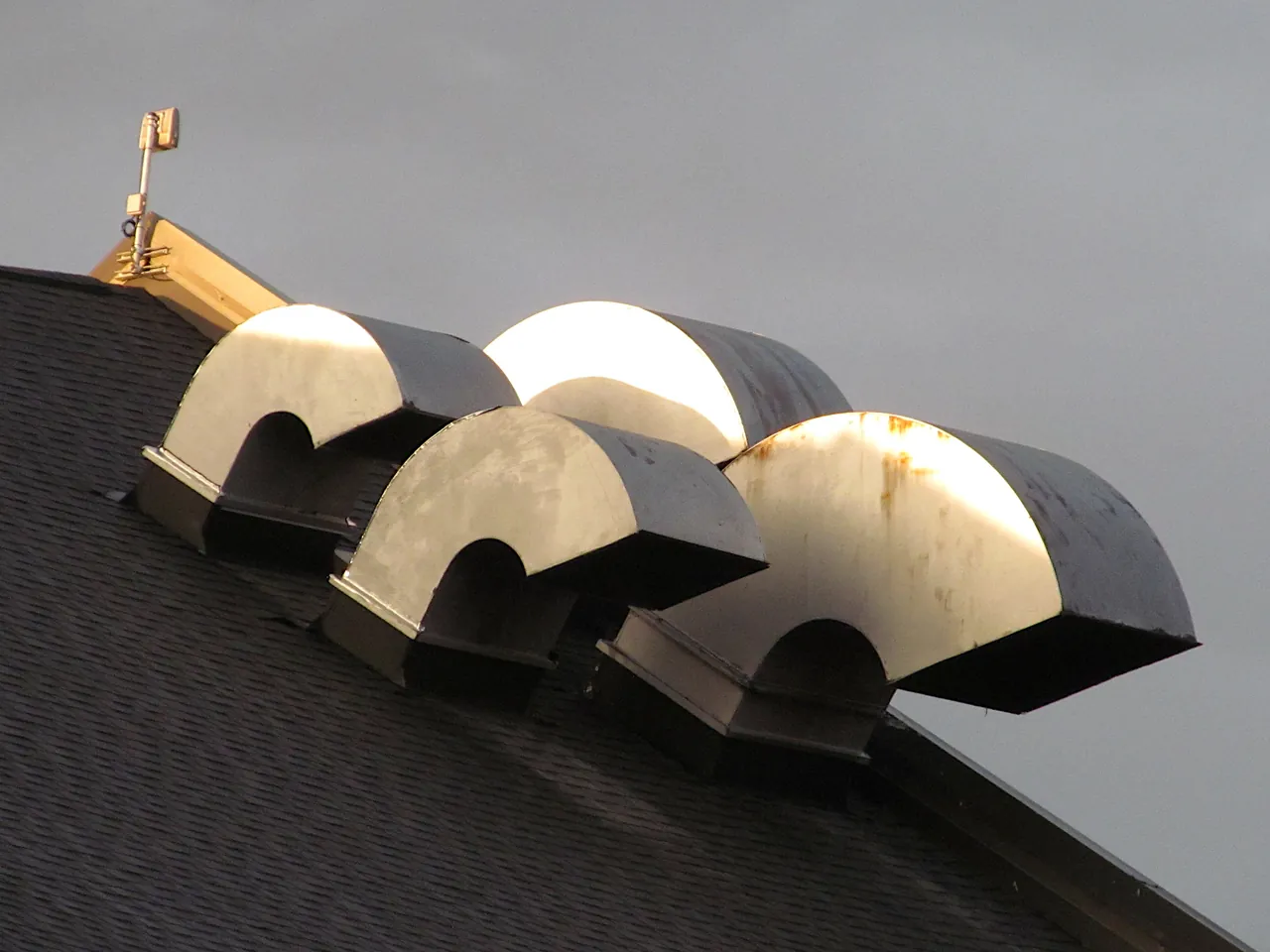
An attic fan is a small job with a wide price range. Where it mounts, how it is powered and whether the attic has a circuit decide most of the bill. Whether the attic should have a fan at all decides the rest.
The pages that rank for this search today are a fan store's product list, a 2021 Facebook group post asking for estimates, and a page about repairs. None prices the whole job or asks whether the attic needs a fan. This guide does both, with every figure dated and linked. If your fan exists and has simply stopped, our attic fan repair guide covers fixing it. The work itself is described on our attic ventilation page.
What an Attic Fan Costs Installed
HomeGuide breaks the installed price down by where the fan mounts and how it is powered. The ranges include the fan and the labor:
Installed attic fan prices by type, HomeGuide (national, not R&E Roofing prices)
| Fan type | Installed price |
|---|---|
| Roof-mounted electric fan | $200 to $1,200 |
| Gable-mounted electric fan | $200 to $1,000 |
| Roof-mounted solar fan | $300 to $1,400 |
| Gable-mounted solar fan | $350 to $1,200 |
| Roof turbine (no motor) | $150 to $300 |
The other national cost guides land in the same zone. Their dates differ, so read the newest ones first:
Attic fan installation cost by publisher (national figures)
| Publisher | Published figure |
|---|---|
| HomeGuide (April 19, 2024) | $300 to $900 on average; national average $600 |
| Angi (updated September 24, 2026) | Average $625 from 2,806 projects; most pay $369 to $914 |
| HomeAdvisor (updated June 20, 2026) | Average $625; most $369 to $914; as low as $200 or as high as $1,500 |
| Fixr (updated August 26, 2022) | $225 to $850; about $450 for a gable electric fan with a thermostat |
| Thumbtack (updated June 4, 2026) | $194 to $455 |
No New Jersey figure. None of these guides publishes a New Jersey price. The nearest is HomeAdvisor's city table, which lists New York, NY at $465. Bob Vila's guide repeats the HomeAdvisor and Angi range of $369 to $913.
Sources, read November 16, 2026: HomeGuide, attic fan installation cost (April 19, 2024); Angi, attic fan installation cost (updated September 24, 2026); HomeAdvisor, install an attic fan (updated June 20, 2026); Fixr, attic fan installation (updated August 26, 2022); Thumbtack, attic fan installation cost (updated June 4, 2026); Bob Vila, attic fan installation cost (December 19, 2023).
What Goes Into the Price
Three things move an attic fan quote more than the fan itself: where it mounts, whether there is power in the attic, and what the roof is made of.
Attic fan cost line items (national, not R&E Roofing prices)
| Line item | Published cost |
|---|---|
| The fan itself | $65 to $650 (Angi); $90 to $850 (HomeGuide) |
| Labor, roof-mounted fan | $45 to $85 an hour, about two hours: $90 to $170 (HomeAdvisor) |
| Labor, gable-mounted fan | About $70 an hour of carpentry, about $140 (HomeAdvisor) |
| New electrical line to the attic | $7 to $10 per linear foot (HomeGuide) |
| Electrician | $50 to $130 an hour (HomeGuide) |
| New circuit, or switching to solar | An extra $500 to $700 (HomeAdvisor) |
| Thermostat or humidistat, installed | $100 to $300 (HomeGuide) |
| Supplies and add-ons | $150 to $400 for shingles, vents, a thermostat (Angi) |
- Roof or gable. HomeGuide says installing a fan on the roof takes more labor than a gable wall, because it means cutting and flashing a new opening.
- Time on site. HomeGuide says a typical install takes 3 to 5 hours, an exact replacement 1 to 2 hours, and jobs needing extra vents or wiring 4 to 8 hours.
- Who does which part. HomeGuide says to hire a roofer for a roof-mounted fan, an electrician if new wiring is needed, and a carpenter for gable framing. Fixr says electricians typically do only the wiring.
Sources, read November 16, 2026: HomeGuide; Angi; HomeAdvisor; HomeAdvisor, attic fan repair cost (updated June 20, 2026); Fixr.
Replacing an Old Fan
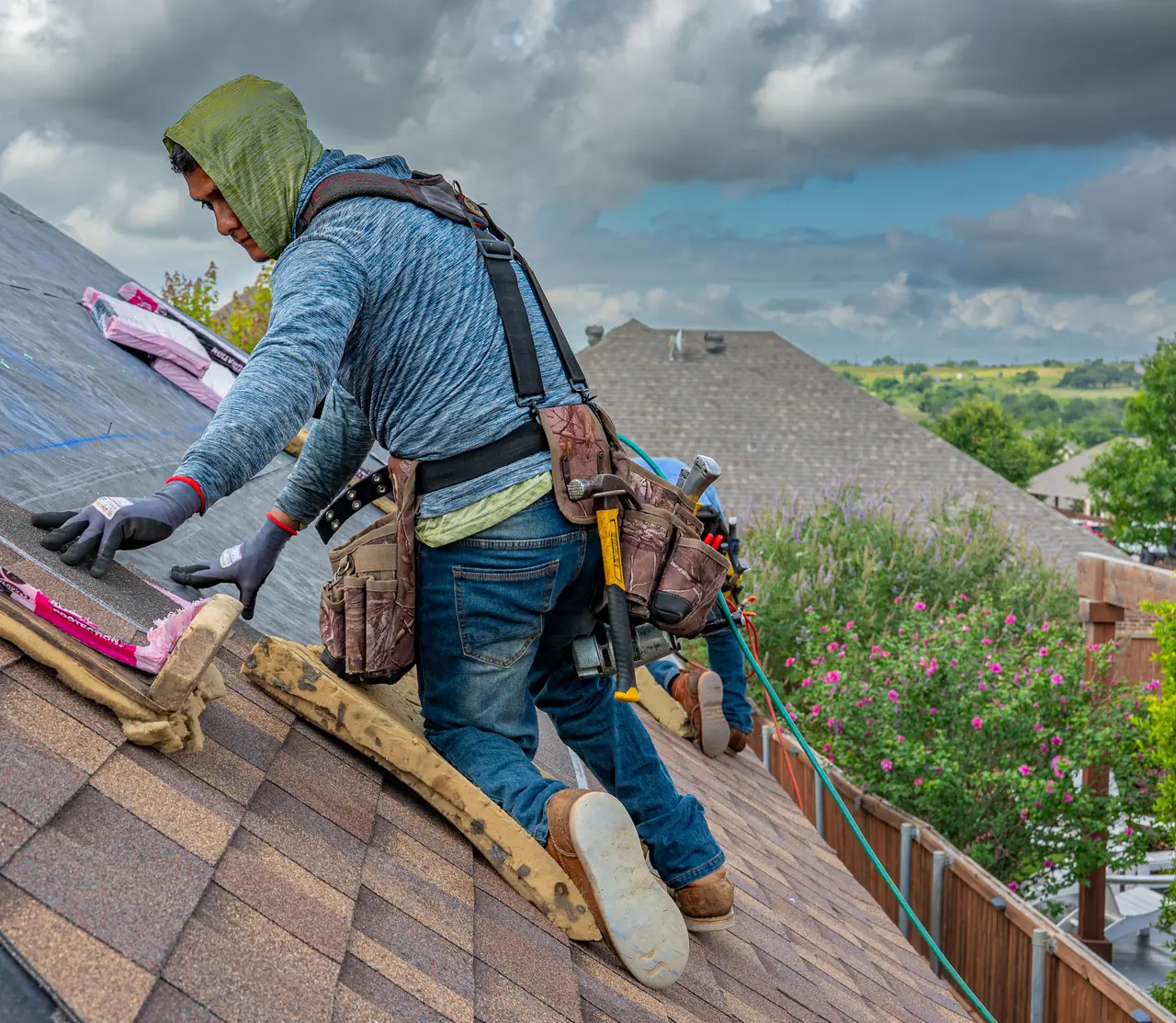
A replacement usually goes into the existing opening, which keeps the cost down. Bob Vila notes that using the existing hole saves time and money, and that a roofing contractor should assess it first.
- Replacement price: $300 to $900 (HomeGuide), recommended for fans older than 10 years. HomeAdvisor puts a new fan at $370 to $920, averaging $625.
- The old unit: HomeAdvisor describes a two- to three-hour job that includes removing it. HomeGuide prices removal and disposal at $25 to $100.
- A different size: a bigger or smaller base means recutting the opening and reflashing it, which is roof work.
- Removing a fan for good: no cost guide prices this as its own line. HomeGuide lists roof repair at $40 to $100 an hour with a $150 to $300 minimum; HomeAdvisor lists roof repair at $400 to $1,930.
If the fan only needs a motor, a thermostat or a new cap, it may not need replacing at all. Our attic fan repair guide walks through the symptoms and the repair-or-replace numbers.
Sources, read November 16, 2026: Bob Vila; HomeGuide, attic fan repair costs (April 19, 2024); HomeAdvisor, attic fan repair cost; HomeGuide.
Solar Attic Fans: Price, Power and the Tax Credit Question
Solar fans cost more up front and nothing to run. HomeGuide puts a solar attic fan at $300 to $1,400 with labor, or $200 to $850 for the fan alone. Angi lists solar fans at $300 to $1,000.
- No house wiring. The panel powers the motor, so there is no circuit to add. The Department of Energy's Building America program notes that solar units run only when the sun is shining by default.
- Smaller airflow. GAF's Master Flow solar roof vent has a 35-watt panel, moves up to 750 CFM on solar power and covers up to 1,070 square feet of attic. QuietCool lists a 40-watt model at 1,104 CFM for up to 1,500 square feet.
- Some are hybrids. QuietCool's model has a plug-in AC/DC inverter so it can run after dark, and GAF sells a dual-powered version that switches to house power.
- Modest savings. In a Florida test home, the Florida Solar Energy Center measured a 6% cut in air conditioning use from two solar fans, worth about $37 a year, against about $850 installed: a payback of over twenty years.
The federal credit has ended. HomeGuide still says solar fans may qualify for tax incentives. The IRS says the Residential Clean Energy Credit is not available for any property placed in service after December 31, 2025, and its list of qualified property does not include attic fans. Do not count a 2026 credit into the price.
Sources, read November 16, 2026: HomeGuide; Angi; U.S. DOE Building America Solution Center, attic ventilation fans; GAF, Master Flow solar roof vent sell sheet (RESMF163); QuietCool, AFR SLR-40 spec sheet (Rev. 4/11/24); Florida Solar Energy Center, Parker and Sherwin, FSEC-GP-171-00 (2000); IRS, Residential Clean Energy Credit (reviewed July 4, 2026).
How Big a Fan, and How Much Intake
A fan is sized by the attic floor area, and it only works if air can get in at the eaves to replace what it pushes out. The Home Ventilating Institute's rule of thumb: multiply the attic square footage by 0.7 to get the minimum airflow in cubic feet per minute (CFM), or by 0.805 for a dark or steep roof.
Attic fan size and soffit intake, Home Ventilating Institute
| Attic | Minimum fan airflow or intake |
|---|---|
| 1,000 sq ft of attic floor | 700 CFM; 805 CFM for a dark or steep roof |
| 2,000 sq ft of attic floor | 1,400 CFM; 1,610 CFM for a dark or steep roof |
| 3,000 sq ft of attic floor | 2,100 CFM; 2,415 CFM for a dark or steep roof |
| Intake for an 805 CFM fan | 386 net square inches of soffit vent |
| Intake for a 1,610 CFM fan | 773 net square inches |
- The intake rule. HVI calls for at least one square foot of inlet for every 300 CFM of fan. In square inches: divide the fan's CFM by 300 and multiply by 144.
- A worked example. A 1,200-square-foot attic under dark shingles needs about 966 CFM (1,200 × 0.805), and about 464 square inches of soffit intake (our arithmetic, using HVI's formula).
- GAF's numbers. Its Master Flow bulletin lists a 1,000 CFM roof fan needing 480 square inches of intake and a 1,250 CFM model needing 600, and says exhaust should never exceed intake.
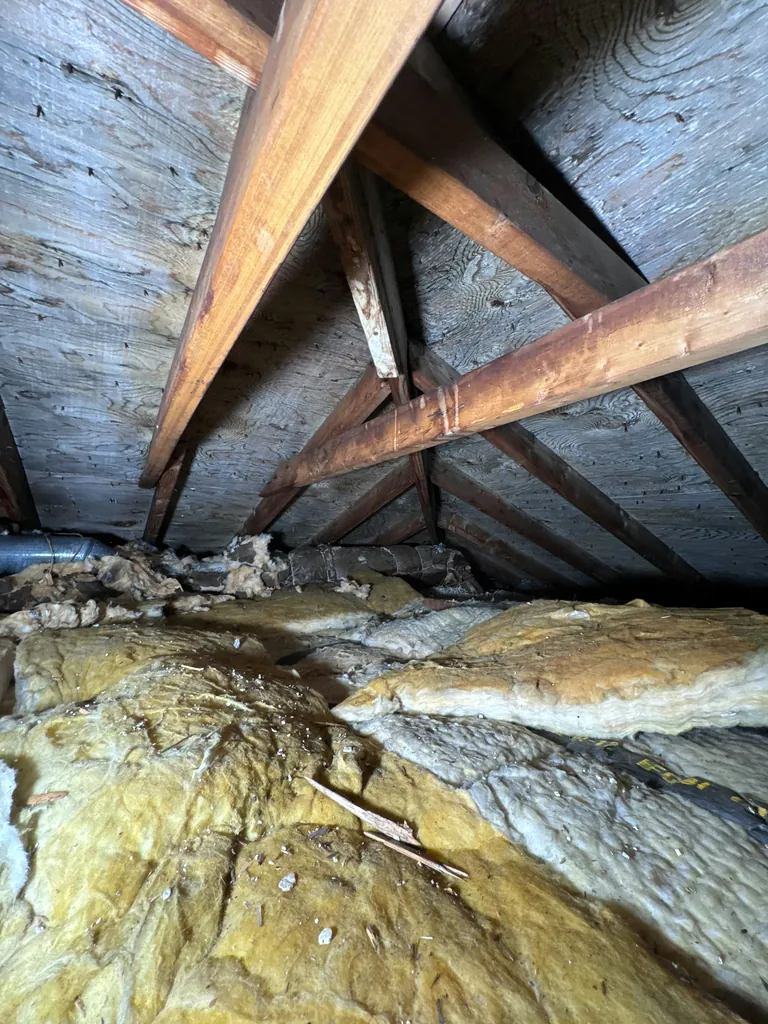
- Why it matters to the price. GAF says too little intake can burn out the motor and is not a manufacturing defect, so the damage may not be covered. Adding soffit vents belongs in the quote.
Sources, read November 16, 2026: Home Ventilating Institute, Attic Ventilation; GAF, Technical Advisory Bulletin TAB-R-174, power attic vents and intake ventilation.
New Jersey's Code and Permits
New Jersey adopted the 2024 International Residential Code as its one- and two-family dwelling subcode (N.J.A.C. 5:23-3.21(a)1). The state's code page dates it August 17, 2026, and for six months after a revision, a complete permit application may still be reviewed under the code it replaced (N.J.A.C. 5:23-1.6). New Jersey's amendments do not change the roof ventilation section, R806:
- R806.1: enclosed attics need cross ventilation, with openings protected against rain and snow and against “birds, rodents, snakes and other similar creatures.”
- R806.2: the net free vent area must be at least 1/150 of the attic area, or 1/300 when 40 to 50 percent of it sits within 3 feet of the ridge and the rest is low in the attic.
- R806.3: insulation may not block eave vents, with at least a 1-inch space below the roof sheathing.
- R806.4: ventilators go in following the maker's instructions.
Section R806 does not require a powered fan anywhere. The code asks for vent area and balance, which a ridge and soffit system can meet without a motor.
Permits. Adding, altering, replacing or relocating electrical wiring is not ordinary maintenance (N.J.A.C. 5:23-2.7(b)6iii), so a fan that needs new wiring needs a permit. “Replacement of motors, pumps and fans of the same capacity” is listed as ordinary maintenance (N.J.A.C. 5:23-2.7(c)5i), as is repairing or replacing roof covering on a detached one- or two-family home. Attic fans are not named, so ask your town's construction office how it treats a like-for-like swap.
Sources, read November 16, 2026: N.J.A.C. 5:23-3.21, New Jersey Department of Community Affairs (current through N.J.R. August 17, 2026); NJ DCA, current construction codes; N.J.A.C. 5:23-1.6; 2024 IRC, New Jersey edition, Chapter 8 (UpCodes); N.J.A.C. 5:23-2.7.
Do You Need a Fan at All?
Sometimes the cheapest fan is no fan. The research is consistent, and it matches what our roof ventilation guide says about passive venting for most Essex County homes:
- Not with a ridge vent. HomeGuide says a fan is not recommended for homes with ridge vents, because it can stop hot air leaving through the ridge and pull water into the attic.
- Small benefit. The Department of Energy's Building America program says the extra benefit of attic fans over passive venting is usually not large, and that ENERGY STAR does not recommend them.
- It can pull cooled air upstairs. ENERGY STAR warns that with blocked soffits and a leaky ceiling, attic fans will suck cool conditioned air up out of the house.
- Measured, not guessed. A 1994 field study by Tooley and Davis found powered attic ventilators drew an average of 231 CFM of conditioned air out of the houses tested.
- Gas appliances. The same study found a water heater that stayed in complete backdraft while the fans ran, and the Building America program warns that combustion appliances could backdraft.
When a fan can make sense. The Building America program says fans help most where attic insulation is thin, the roof is dark and unshaded, there is no radiant barrier, or the heating and cooling equipment sits in the attic. If one of those fits your house and the soffits can supply the intake, a fan is a reasonable choice. If your roof already has a ridge vent, improving the soffit intake is usually the better spend.
Sources, read November 16, 2026: HomeGuide; U.S. DOE Building America Solution Center; ENERGY STAR, About Attic Ventilation; Tooley and Davis, “Powered Attic Ventilators,” ACEEE Summer Study (1994).
Older Essex County Houses: What Changes the Job
In Essex County, 29.1% of homes were built in 1939 or earlier (U.S. Census Bureau, American Community Survey 2020-2024). Houses that age bring their own questions:
- Steep and slate roofs. HomeGuide says a roof-mounted fan takes more labor than a gable fan. On a steep or slate roof, a gable fan set in the end wall avoids cutting the roof at all.
- Soffits that no longer breathe. Paint, boxed-in eaves or insulation over the vents can block the intake a fan depends on. ENERGY STAR warns that with blocked soffit vents a fan pulls cooled air out of the house, and R806.3 asks for clear air at the vents.
- Old wiring. An attic with no usable circuit means a new line, at $7 to $10 a foot (HomeGuide), plus a permit.
- Summer heat. Newark averages 28.3 days a year at 90°F or above (NOAA 1991-2020 normals), the days a thermostat fan runs longest.
Fans also wear out. HomeGuide says electric and solar fans last 10 to 15 years, against 40 to 50 years for passive roof vents. InterNACHI's chart lists 15 to 25 years for an attic fan, as a guideline only. When an old fan dies on a roof that needs replacing anyway, our attic ventilation guide explains the passive options.
Sources, read November 16, 2026: U.S. Census Bureau, ACS 2020-2024 5-year, table DP04, Essex County, NJ; 2024 IRC R806.3; ENERGY STAR; HomeGuide; NOAA NCEI, 1991-2020 annual normals, Newark Liberty International Airport; InterNACHI, Standard Estimated Life Expectancy Chart.
Questions Homeowners Ask About Attic Fan Costs
How much does it cost to install an attic fan in New Jersey?
None of the national cost guides we read gives a New Jersey figure. Nationally, HomeGuide puts installation at $300 to $900 on average, and Angi's 2026 average is $625, with most homeowners paying $369 to $914. HomeAdvisor's city table lists New York, NY at $465. These are not R&E Roofing's prices; a fan is priced after the attic, the roof and the wiring have been looked at.
What is the labor charge to install an attic fan?
Angi puts labor at $45 to $85 an hour. HomeAdvisor says a roof-mounted fan takes about two hours, or $90 to $170 in labor, and a gable fan about $140 of carpentry. Wiring is extra: HomeGuide lists electricians at $50 to $130 an hour.
How much does it cost to replace an attic fan?
HomeGuide puts replacement at $300 to $900 and recommends it for fans older than 10 years. HomeAdvisor's figure for a new fan is $370 to $920, averaging $625, for a two- to three-hour job that includes removing the old unit. If the old fan only needs a motor or a thermostat, see our attic fan repair guide first.
Is an attic fan cheaper than air conditioning?
They do different jobs. An attic fan cools the unconditioned attic, not your rooms. The Florida Solar Energy Center measured a 6% cut in air conditioning use from two solar attic fans in a Florida test home, with a payback of over twenty years. If the goal is cooler rooms, an attic fan is not a substitute for air conditioning.
Is a whole house attic fan worth it?
A whole-house fan is a different product. The U.S. Department of Energy's Building America program explains that whole-house fans pull air through the house and exhaust it into the attic to cool the living space, while attic fans exhaust only the attic. HomeGuide puts a whole-house fan at $600 to $2,300 installed.
Do solar attic fans qualify for a federal tax credit in 2026?
Not under the Residential Clean Energy Credit. The IRS says that credit is not available for any property placed in service after December 31, 2025, and its list of qualified property does not name attic fans. Some cost guides still say a solar fan may qualify; check with a tax adviser before counting on it.
How long does an attic fan last?
HomeGuide and HomeAdvisor say electric and solar attic fans last 10 to 15 years, while passive roof vents last 40 to 50 years. InterNACHI's life expectancy chart lists 15 to 25 years for an attic fan, as a guideline only.
Do I need a permit to install an attic fan in New Jersey?
Adding or changing electrical wiring is not ordinary maintenance in New Jersey (N.J.A.C. 5:23-2.7(b)6iii), so a new fan that needs new wiring needs a permit. Replacing motors and fans of the same capacity is listed as ordinary maintenance (N.J.A.C. 5:23-2.7(c)5i). Whether a like-for-like attic fan swap counts is your town's construction official's call, so ask first.
Does R&E Roofing install attic fans?
Yes. We install, replace and repair attic fans on homes in Orange and across Essex County, and we look at the attic's intake and existing vents first, because a fan fights a ridge vent. New wiring is an electrician's work. Call (667) 204-1609 or use our quote form, with your town and what kind of fan you have now.
Sources
Every figure on this page comes from one of these, each read on November 16, 2026.
- HomeGuide, Attic Fan Installation Cost (April 19, 2024)
- HomeGuide, Attic Fan Repair Costs (April 19, 2024)
- Angi, Attic Fan Installation Cost (updated September 24, 2026)
- HomeAdvisor, How Much Does It Cost to Install an Attic Fan? (updated June 20, 2026)
- HomeAdvisor, How Much Does Attic Fan Repair Cost? (updated June 20, 2026)
- Fixr, Attic Fan Installation Cost (updated August 26, 2022)
- Thumbtack, Attic Fan Installation Cost (updated June 4, 2026)
- Bob Vila, Attic Fan Installation Cost (December 19, 2023)
- Home Ventilating Institute, Attic Ventilation
- GAF, TAB-R-174, Power Attic Vents and the Importance of Proper Attic Intake Ventilation
- GAF, Master Flow GreenMachine solar roof vent sell sheet (RESMF163)
- QuietCool, AFR SLR-40 solar attic fan spec sheet
- N.J.A.C. 5:23-3.21, one- and two-family dwelling subcode
- New Jersey Department of Community Affairs, current construction codes
- N.J.A.C. 5:23-1.6, grace period for subcode revisions
- N.J.A.C. 5:23-2.7, ordinary maintenance
- 2024 International Residential Code, New Jersey edition, Chapter 8, Section R806 (UpCodes)
- IRS, Residential Clean Energy Credit
- U.S. Department of Energy, Building America Solution Center, Attic Ventilation Fans
- ENERGY STAR, About Attic Ventilation
- Florida Solar Energy Center, Performance Assessment of Photovoltaic Attic Ventilator Fans (2000)
- Tooley and Davis, Powered Attic Ventilators, ACEEE Summer Study (1994)
- InterNACHI, Standard Estimated Life Expectancy Chart
- U.S. Census Bureau, ACS 2020-2024, table DP04, Essex County, NJ
- NOAA NCEI, 1991-2020 normals, Newark Liberty International Airport