Attic Fan Not Working? An Essex County, New Jersey Guide to Repairing It, Replacing It, and Stopping a Leak at the Fan
For Essex County Homeowners: The Short Answer
- Check the breaker and the thermostat first. Most fans start only above a set attic temperature, often 100 to 105°F, so a still fan on a mild day may be working.
- Humming, squealing or a burning smell usually means the motor. National guides put a motor replacement at $150 to $650.
- Replace instead when the fan is past 10 to 12 years old, or the repair is more than half the price of a new fan.
- Water around the fan is a roof repair: the flashing, the cap or the shingles. R&E Roofing repairs and replaces attic fans across Essex County.
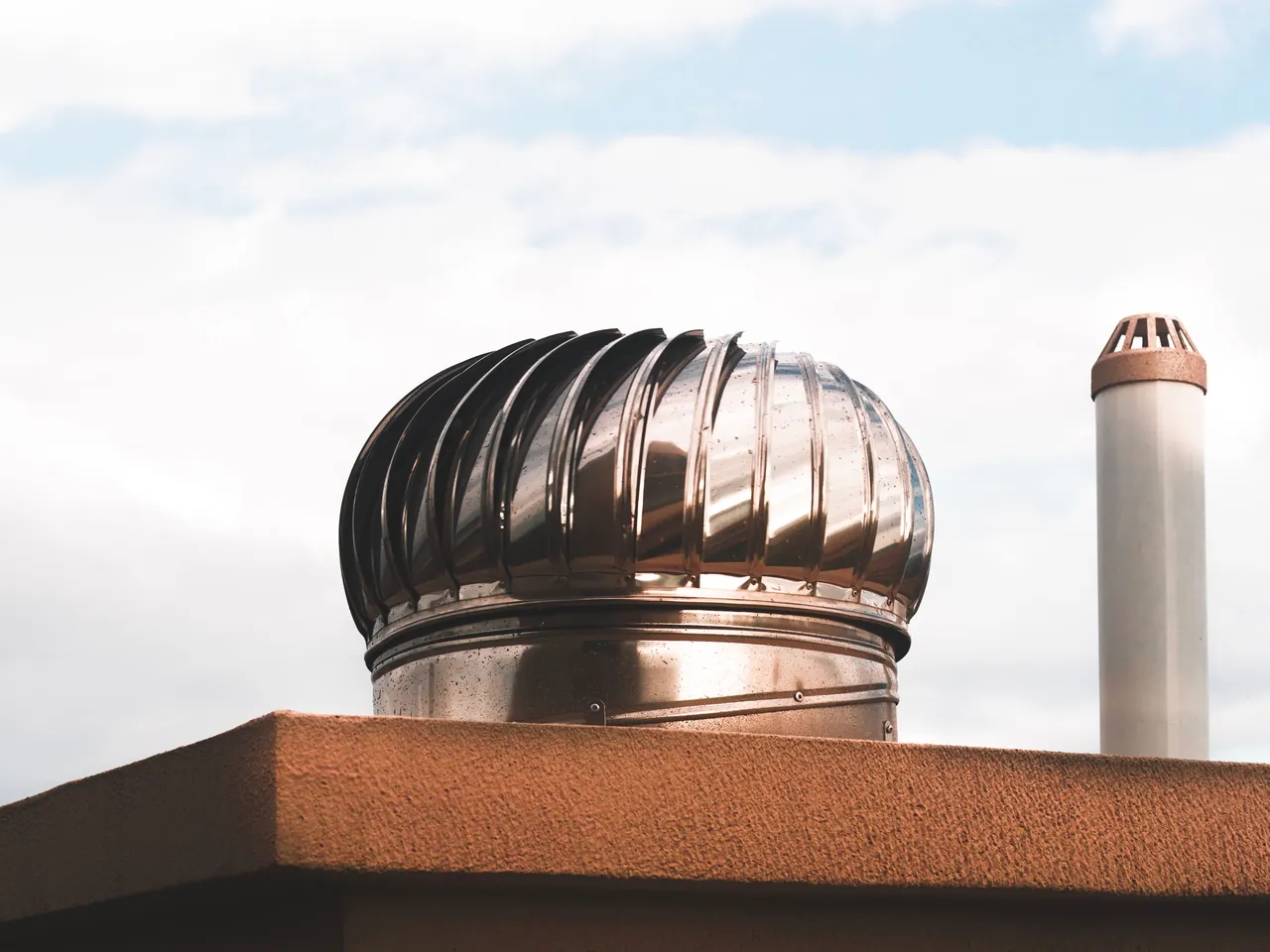
An attic fan that has gone quiet is not always broken. One that hums, squeals, runs nonstop or drips when it rains almost always needs attention. This guide sorts the two, using the fan makers' own manuals.
The pages that rank for this search today are a directory listing, a template repair site and a 20-year-old question with no answer. So we wrote the guide we would want: the checks to make first, what each symptom points to, what repairs cost according to the national cost guides, and who fixes what in New Jersey. If the fan is past saving, our attic fan installation and replacement cost guide has the prices for a new one. The repairs themselves are on our attic ventilation page.
Four Checks Before You Call Anyone
These take a few minutes and need no tools. Stay off the roof and keep your hands away from the blades.
- The breaker and any switch. Look for a tripped breaker or a wall switch that controls the fan. HomeAdvisor says resetting a tripped breaker may fix it at no cost. If it trips again, stop and call an electrician.
- The thermostat setting. GAF's Master Flow thermostat adjusts from 60 to 120°F, with 105°F as the factory setting. Air Vent recommends 100 to 105°F. Lomanco ships its fans set to switch on at 100°F and off at 85°F. Below that, the fan is supposed to sit still.
- The test button. Lomanco's thermostats have a push-to-test button. If the fan runs while you hold it, the motor works and the setting needs lowering. If it does not run, Lomanco says the motor should be replaced.
- The sun, for a solar fan. Natural Light says its fan will not work if the panel is shaded or partly shaded, and to clean dust and bird droppings off the panel. Remington Solar says its fans may not run, or run on and off, below 82°F or without direct sun.
Before anyone works on a wired fan, the power goes off at the panel. The GAF, Air Vent and Lomanco manuals all say to switch it off and lock the panel, because the thermostat can start the fan at any moment.
Sources, read November 16, 2026: HomeAdvisor, attic fan repair cost (updated June 20, 2026); GAF, Master Flow power attic vent installation instructions (RESMF324); Air Vent, roof mounted power attic ventilator instructions; Lomanco, power vents; Lomanco, “Why isn't my power vent turning on?”; Natural Light, solar attic fan FAQs; Remington Solar, fan not running.
What the Fan Is Telling You
Match what you see and hear to the likely cause. Most rows come straight from the fan makers' guidance; the cost guides fill in the rest.
Attic fan symptoms and their usual causes
| What you notice | Usual cause |
|---|---|
| Silent, breaker on, fan starts when you press its test button | Thermostat or humidistat setting, or a failed control |
| Silent, breaker on, will not start even on test | Motor (Lomanco says to replace it) |
| Hums but the blades do not turn | Motor or its capacitor |
| Squeals or whines | Motor bearings wearing out |
| Knocks, rattles or vibrates | Fan not level or not secured, loose shingle edges, bent blade |
| Runs all the time, even on cool days | Thermostat or humidistat set too low, or broken |
| Burning electrical smell at the vent | Motor failing: switch the fan off at the breaker |
| Solar fan stops or runs on and off | Shade, dirt on the panel, too cool, or a failed thermal switch |
| Stain or drips around the fan when it rains | Flashing, cap or shingles around the fan: a roof repair |
- Hum, no spin. HomeGuide says no blade movement with a hum may mean a broken motor or belt. If the fan runs after a careful hand start, it points to a bad capacitor.
- Squeal or whine. Lomanco says the motor bearings are probably starting to fail, and recommends a new motor.
- Knocking or banging. GAF says a fan that was not leveled or secured can vibrate. Lomanco says to make sure the unit is secured, with loose shingle edges cemented down.
- Runs nonstop. HomeGuide says a fan that never stops may have a broken thermostat or humidistat. Check the settings first.
- Burning smell. HomeAdvisor lists a burning electrical smell from the vent as a sign of a bad motor. Switch the fan off at the breaker and leave it off.
Sources, read November 16, 2026: HomeGuide, attic fan repair costs (Tara Farmer); Lomanco, “Why is my power vent making a loud noise?”; GAF, “4 Possible Reasons for Attic Fan Noise” (August 3, 2023); HomeAdvisor; Natural Light.
Repair or Replace? Published Prices and Rules of Thumb
These are national figures from four cost publishers, each dated below. They are not R&E Roofing's prices. A roof-mounted fan on a steep or slate roof takes longer to reach, which moves the labor.
Published attic fan repair and replacement prices (national, not R&E Roofing prices)
| Job | Published range |
|---|---|
| Typical attic fan repair | $203 to $440, average $302 (HomeAdvisor; Angi); $100 to $500, about $325 (HomeGuide) |
| Motor replacement, parts and labor | $150 to $650 (HomeGuide; Angi) |
| Thermostat replacement | $80 to $300 (HomeGuide; Angi) |
| Wiring repair | $80 to $200 (HomeGuide); $100 to $250 (Angi) |
| Cover or cap replacement | $90 to $250 (HomeGuide); vent cover $80 to $250 (Angi) |
| Solar attic fan repair | $200 to $800, with $100 to $500 of parts (HomeAdvisor) |
| New attic fan installed | $300 to $900 (HomeGuide); $370 to $920, average $625 (HomeAdvisor) |
| Removing and disposing of the old fan | $25 to $100 (HomeGuide) |
Labor rates. HomeGuide says electricians charge $50 to $130 an hour for attic fan repairs, with a $75 minimum call-out. Fixr puts roofers at $45 to $75 an hour to install an attic fan.
When to replace instead. The guides agree on the shape of the decision, if not the exact year:
- Angi's 50% rule: if a repair costs more than half of a replacement, replace.
- HomeAdvisor: a fan over 12 years old with problems may be cheaper to replace.
- HomeGuide: replacement is recommended for fans older than 10 years, and for a motor older than 10 years.
- Life expectancy: HomeGuide says 10 to 15 years on average, shorter in hot, humid climates. InterNACHI's chart lists 15 to 25 years for an attic fan, as a guideline only.
Check the warranty before you pay for a motor. HomeGuide says electric fans typically carry 1- to 3-year warranties and solar fans up to 25 years. Air Vent's manual describes a lifetime limited warranty on one roof fan that covers the motor but not labor. Natural Light asks owners to request a warranty replacement motor. The model label in the attic tells you whose fan it is.
A motor swap can leave the roof alone. GAF sells replacement motors for its current and older Master Flow roof and gable fans, and says the vent may stay in place during the swap. Lomanco lists one current motor that replaces several older models. A motor change does not disturb the flashing; a new fan does.
Sources, read November 16, 2026: HomeAdvisor (updated June 20, 2026); HomeGuide (written April 19, 2024); Fixr, attic fan repair cost (updated August 29, 2025); Angi, attic fan repair cost (updated October 8, 2026); InterNACHI, Standard Estimated Life Expectancy Chart; Air Vent; GAF, Master Flow replacement motors; Lomanco.
Why Attic Fan Motors Burn Out Early
A new motor in the same attic can fail the same way. The fan makers name the usual reason plainly:
- Not enough intake air. Lomanco calls lack of intake ventilation “the number one cause of motor failure” and says each of its power vents needs 384 square inches of intake.
- GAF agrees. Its manual says intake at or near the soffit is required for a balanced system and helps avoid premature motor failure.
- Noise is an early warning. GAF says a fan choked of air from the intake vents at the roof overhang is the most likely source of attic fan noise.
In older houses, soffits can end up painted shut, boxed in or covered by insulation. A fan pulling against closed soffits works harder, and ENERGY STAR warns it then pulls cooled air up from the rooms below. Our roof ventilation guide for New Jersey explains that suction, and why a fan and a ridge vent on the same roof work against each other. If your roof already has a ridge vent, a dead fan may be a chance to remove it rather than replace it.
Sources, read November 16, 2026: Lomanco, “My motor seems to burn out prematurely”; GAF RESMF324; GAF, attic fan noise; ENERGY STAR, About Attic Ventilation.
A Leak at the Fan Is a Roof Repair
A roof-mounted fan sits in a hole cut through the roof. What keeps rain out is the way its flange is laid into the shingles. The makers describe the same method:
- Under above, over below. GAF has the flashing slid up under the top shingles, with the lower part left on top of the shingles. Air Vent says to slip the upper half of the flange under the shingles.
- Nailed and sealed. GAF calls for roofing nails at every corner and about every 4 inches along the flange, then sealing all exposed fasteners, seams and loose shingles.
- Not too much cement. GAF warns that excess roof cement may blister the shingles.
- Not on a flat roof. GAF says not to use its roof fan on a slope under 2:12.
So the usual leak points are a flange laid on top of the course above, nail heads that have backed out or lost their sealant, a cracked or dented dome, and shingles that have lifted around the base. Each is fixed from the roof.
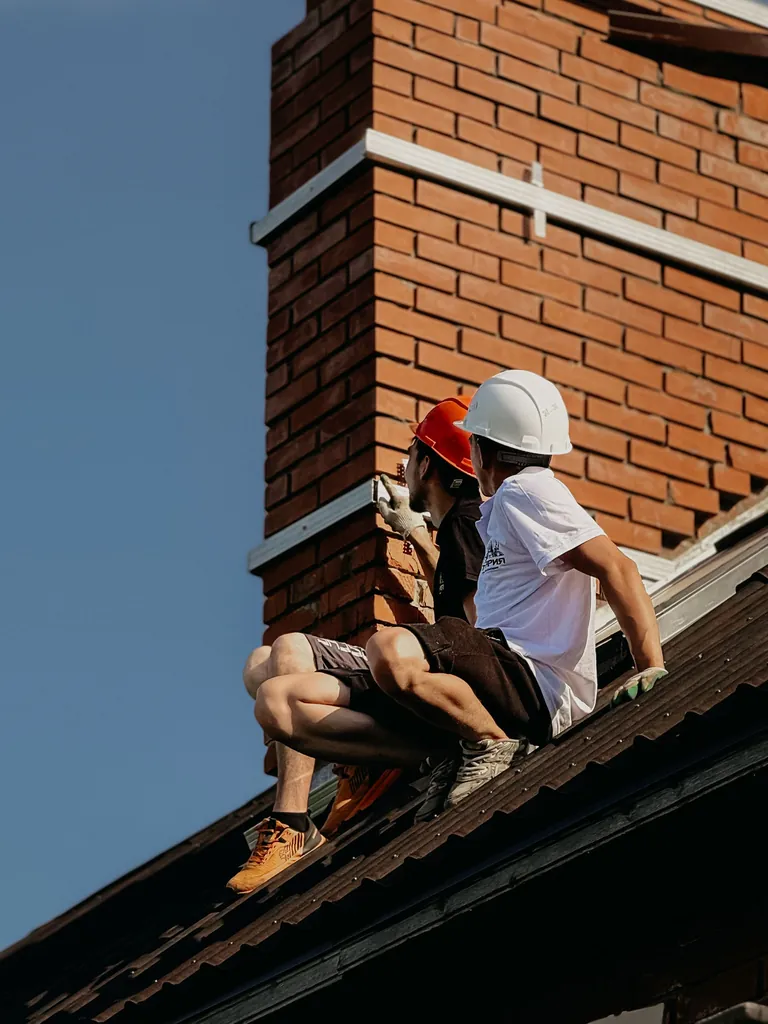
What R&E Roofing does here. We find where the water gets past the fan and fix that part: reset and reseal the flange, replace the cap or the whole fan, or remove a fan that is no longer wanted and roof over the opening. The work is described on our attic ventilation page. For flashing prices from outside sources, see our roof flashing repair cost guide. Not sure the fan is the source? Our guide on how to find a roof leak traces water back to where it gets in.
Repairing or replacing roof covering on a detached one- or two-family house is ordinary maintenance in New Jersey, with no permit (N.J.A.C. 5:23-2.7(c)1x). HomeGuide puts mild to moderate roof repairs at $150 to $3,000, and notes that replacing a roof-mounted fan means sealing every screw and nail head.
Sources, read November 16, 2026: GAF RESMF324; Air Vent; N.J.A.C. 5:23-2.7, New Jersey Department of Community Affairs; HomeGuide.
Roofer or Electrician? How the Work Splits in New Jersey
A broken attic fan sits between two trades. The fan and the roof around it are one job; the house wiring that feeds it is another.
Who usually handles each part of an attic fan problem
| Problem | Who handles it |
|---|---|
| Breaker keeps tripping, dead circuit, or new wiring needed | Electrician |
| Fan shares the attic with a gas or oil furnace (GAF requires an interlock so both cannot run at once) | Electrician |
| The fan's own parts: motor, thermostat, humidistat, blade, dome | Fan repair: R&E Roofing repairs and replaces attic fans |
| Leak at the base, cracked cap, loose shingles around the fan | Roofer |
| Fan removed for good and the opening roofed over | Roofer |
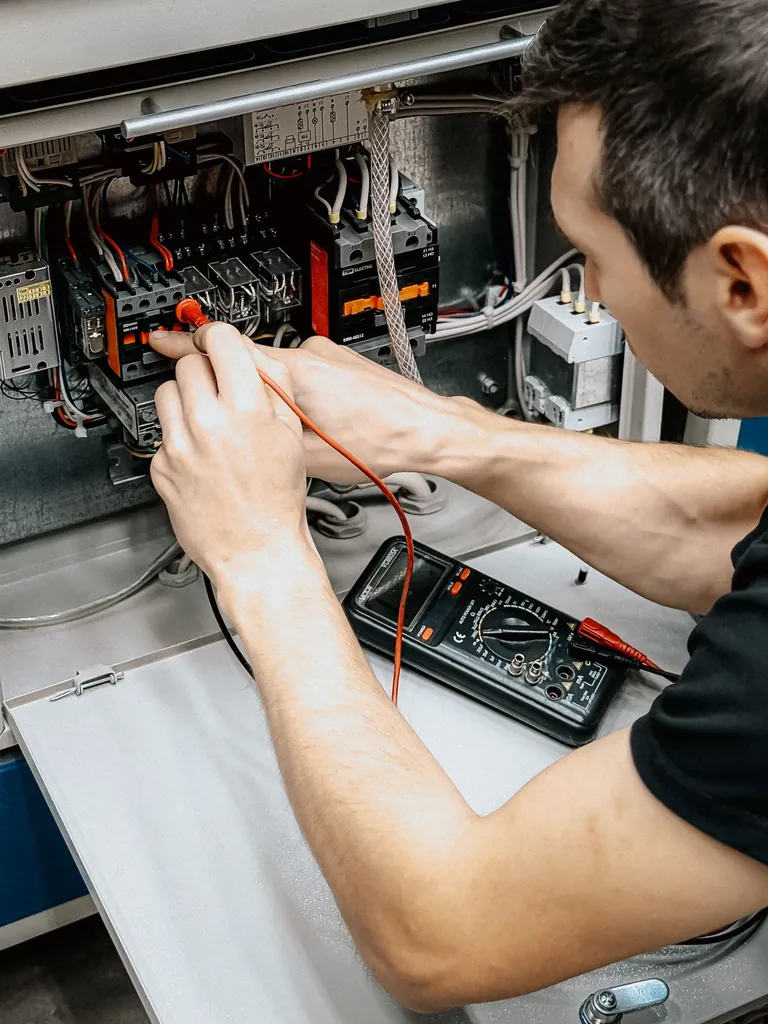
What New Jersey's rules say. The state lists these as ordinary maintenance, with no permit, inspection or notice (N.J.A.C. 5:23-2.7(c)):
- “Repairs to any installed electrically operated equipment such as doorbells, communication systems, and any motor operated device.”
- Replacing a switch with a like or similar item, outside hazardous locations.
- Repairing or replacing roof covering on a detached one- or two-family home.
Adding, altering, replacing or relocating electrical wiring is not ordinary maintenance (N.J.A.C. 5:23-2.7(b)6iii). The fan makers also want a qualified person on the wiring: Air Vent's manual says the electrical installation must be done by a qualified electrician. GAF adds that in a home with a gas or oil furnace in the same space, the fan must be wired with a switch or interlock so the two never run together.
Sources, read November 16, 2026: N.J.A.C. 5:23-2.7 (current through N.J.R. August 17, 2026); Air Vent; GAF RESMF324; Fixr.
Why Essex County Fans Fail in July
Summer is when an attic fan works hardest, and Essex County summers give it a lot of work:
- Long run times. Newark's average July high is 86.9°F, with 11.3 July days at 90°F or above and 28.3 such days a year (NOAA 1991-2020 normals, Newark Liberty International Airport).
- A thermostat set near 100°F keeps the fan running for hours on days like that, which is when a tired motor or bearing gives out.
- Heat wears fans faster. HomeGuide notes that attic fans in hot, humid climates may wear out sooner.
- Attics are hard places to work in summer. NIOSH lists attics among the non-climate-controlled spaces where construction workers face heat stress, and OSHA and NIOSH advise scheduling routine maintenance in cooler seasons.
The practical step: test the fan in April or May, before the first hot spell. Press the test button where there is one, listen for squealing, and look at the ceiling around the attic hatch and under the fan for stains from the winter.
Sources, read November 16, 2026: NOAA NCEI, 1991-2020 monthly normals, Newark Liberty International Airport; NOAA NCEI, 1991-2020 annual normals, same station; HomeGuide; NIOSH, “Heat Stress in Construction” (2020); OSHA and NIOSH, heat illness infosheet.
Questions About Attic Fan Repair
What is typically wrong with an attic fan motor when it does not run?
First rule out the power and the control. If the breaker is on and the fan starts on its test button, the thermostat or humidistat is the problem; Lomanco says that if the motor does not start on test, replace the motor. HomeGuide adds that a hum with no blade movement points to the motor or belt, and that a fan which runs after a hand start points to a bad capacitor.
Is it worth repairing an attic fan?
Usually, if the fan is under about ten years old and the repair costs less than half of a new one. Angi calls this the 50% rule. HomeAdvisor suggests replacing a fan over 12 years old that keeps having problems, and HomeGuide recommends replacement for fans older than 10 years.
How much does it cost to replace an attic exhaust fan?
HomeGuide puts a new attic fan, installed, at $300 to $900, and HomeAdvisor at $370 to $920 with a $625 average. These are national figures, not R&E Roofing's price. Our attic fan installation cost guide breaks the price down by fan type.
How do I change out an attic fan?
Switch the power off at the panel and lock it first: the GAF, Air Vent and Lomanco manuals all say so, because a thermostat can start the fan at any time. Some makers sell motor kits that go in with the fan left on the roof. A whole new fan means lifting shingles and sliding the new flange under the course above, so it is roof work, and any new wiring is an electrician's job.
Why is my attic fan running in the winter?
It probably has a humidistat. Air Vent's manual recommends a setting of about 65% relative humidity and GAF's 70%, so the fan runs when the attic air is damp, whatever the temperature. A fan that runs constantly in any weather may have a control set too low or a broken one.
Why is my attic fan so loud?
Lomanco says squealing or whining usually means the motor bearings are failing and the motor should be replaced, and that vibration means the unit needs securing, with loose shingle edges cemented down. GAF adds that a fan starved of intake air from the soffits can get noisy too.
Do I need a permit to repair an attic fan in New Jersey?
Usually not for a repair. New Jersey lists repairs to installed electrically operated equipment, including any motor operated device, as ordinary maintenance with no permit (N.J.A.C. 5:23-2.7(c)3ii). Changing or adding electrical wiring is not ordinary maintenance. When in doubt, ask your town's construction office.
Does R&E Roofing repair attic fans?
Yes. We repair and replace attic fans and fix leaks around them on homes in Orange and across Essex County. If the fault turns out to be in the house circuit or the wiring, that part goes to an electrician. Call (667) 204-1609 or use our quote form, and tell us your town and what the fan is doing.
Sources
Every figure on this page comes from one of these, each read on November 16, 2026.
- HomeAdvisor, How Much Does Attic Fan Repair Cost? (updated June 20, 2026)
- HomeGuide, Attic Fan Repair Costs (Tara Farmer, April 19, 2024)
- Fixr, Attic Fan Repair Cost (updated August 29, 2025)
- Angi, How Much Does Attic Fan Repair Cost? (updated October 8, 2026)
- GAF, Master Flow Power Attic Vent Roof Mount installation instructions (RESMF324)
- GAF, Master Flow replacement motors
- GAF, 4 Possible Reasons for Attic Fan Noise (August 3, 2023)
- Air Vent, roof mounted power attic ventilator installation instructions
- Lomanco, power vents
- Lomanco support, power vent not turning on
- Lomanco support, power vent noise
- Lomanco support, motor burning out prematurely
- Natural Light, solar attic fan FAQs
- Remington Solar, fan not running
- NOAA NCEI, 1991-2020 monthly normals, Newark Liberty International Airport
- NOAA NCEI, 1991-2020 annual normals, Newark Liberty International Airport
- N.J.A.C. 5:23-2.7 and 2.14, New Jersey Department of Community Affairs
- InterNACHI, Standard Estimated Life Expectancy Chart
- NIOSH, Heat Stress in Construction (2020)
- OSHA and NIOSH, Protecting Workers from Heat Illness
- ENERGY STAR, About Attic Ventilation